
Home / Health (page 8)

Health

Health

Post-Covid, give your skin some TLC- The New Indian Express

Express News Service

HYDERABAD: Fighting Covid in itself is a daunting task, to face multiple health issues post-recovery has made matters worse for many people. The impact of the virus on the patients’ bodies has left many worried. Some of the most common problems include developing sensitive skin, dryness, dehydration and more. City Express gets in touch with experts in the city, who give us detailed information and a clear understanding of post-Covid skin issues. 

Dr Rashmi Shetty, dermatologist and founder of RA Skin and Aesthetics, begins by listing three important things that occur in the body of a person suffering from Covid: inflammation, oxidative stress and nutritional deficits. “Several Covid patients don’t eat well because they cannot smell or taste the food they are consuming. When there is improper or no intake of nutrients, the first signs show on your skin. In worse cases of Covid-19, patients are administered steroids and antiviral drugs which disturb the skin.

That’s why they end up having acne, sensitive skin and other issues. Wearing a mask for long hours is another reason for skin issues. Your pores remain blocked, and you inhale and exhale warm air under the mask, which inflames and infect your pores. Now, imagine applying things to your face in such a condition, it gets even messier,” she explains. 

But certainly, there’s hope, she says. “You can start correcting your nutritional state with your supplements — curcumin helped most of our patients.”

Dr Jagadeesh Kumar, associate director and senior consultant physician at AIG Hospitals, says, “Post-Covid skin issues occur due to two reasons: one, because your immunity fights the virus resulting in your skin bearing the repercussions of the battle. This leads to a condition called xerosis or dryness of the skin. The other reason is the excessive infusion of steroids and other drugs. This happens with any illness that requires such heavy drugs.” 

The doctor says while these issues are treatable, the infections, dryness and dullness can take up to two weeks to one month to heal.

Dr Syed Shazia Fatima, skin and hair expert and cosmetic physician, says the dullness of skin, acne, dandruff and peeling of skin, especially on the palm and soles of the feet, can be reversed. “Give your body the nutrition it needs. Take good supplements and feed your skin with moisturisers and other hydrating agents. When you’re treating something, you also need to protect your skin from further damage, so do not skip using sunscreen. Also, remember to give your skin some rest. Some creams help treat the issues. One can also choose to go for skin treatments after consulting a doctor.”

A good number of patients have also complained of hairfall and dry scalp. Dr Fatima says, “A lot of people who recovered from Covid saw an increase in hairfall. You need to give your hair good care. Take supplements that are rich in biotin and selenium. If the supplements don’t do the trick, one can use some protein-binding serums that help the hair stay more on the scalp. Clinics offer other options such as nutritious shots which can be administered right into the scalp. The cult favourite is the PRP (Platelet-Rich Plasma) shot which helps restore your volume post thinning or hair loss due to Covid.”

Immunity battle 

Post-Covid skin issues occur  because your immunity fights the virus resulting in your skin bearing the repercussions of the battle. This leads to a condition called xerosis or dryness of the skin
News Source link

After recommending booster dose for 40+, INSACOG says more experiments needed, Health News, ET HealthWorld

After recommending booster dose for 40+, INSACOG says more experiments neededThe Indian SARS-CoV-2 Consortium on Genomics (INSACOG) in its recent weekly bulletin has said that many more scientific experiments are needed to assess the impacts of booster dose, which are being guided and monitored by National Technical Advisory Group on Immunisation (NTAGI) and National Expert Group on Vaccine Administration for Covid-19 (NEGVAC).
However, in its previous weekly bulletin dated on November 29, INSACOG has recommended a booster dose for those 40 years of age and over, first targeting the most high-risk / high-exposure “may be considered”.

Clarifying on the need of booster dose amid Omicron looming threat, the top genome sequencing body INSACOG has said that the mention of the booster dose was merely a “discussion about the potential role of additional dose of Covid-19 vaccines in high-risk populations” and the recommendation was not for the India’s immunisation programme.

“Immunity and protection from SARS-CoV-2 is multifactorial with several unknown factors and further compounded by emerging VOCs. Many more scientific experiments are needed to assess the impacts of booster dose, which are being guided and monitored by National Technical Advisory Group on Immunisation and National Expert Group on Vaccine Administration for Covid-19”, said INSACOG.

The recommendations and suggestions regarding vaccines, schedule, and roll out come under the expressed mandate of NTAGI and the NEGVAC, said the Consortium on Genomics INSACOG. NTAGI is also expected to meet next week to assess the need for a booster jab in India.

However, INSACOG’s clarification on the booster jab has come after Union Health Minister Mansukh Mandaviya in the Lok Sabha during the Winter Session said that a decision on booster doses and kids’ vaccines would be taken on the basis of scientific advice. The top health ministry officials have said many times that the priority at the time is to vaccinate all eligible population with both doses at the earliest.

News Source link

Survey, Health News, ET HealthWorld

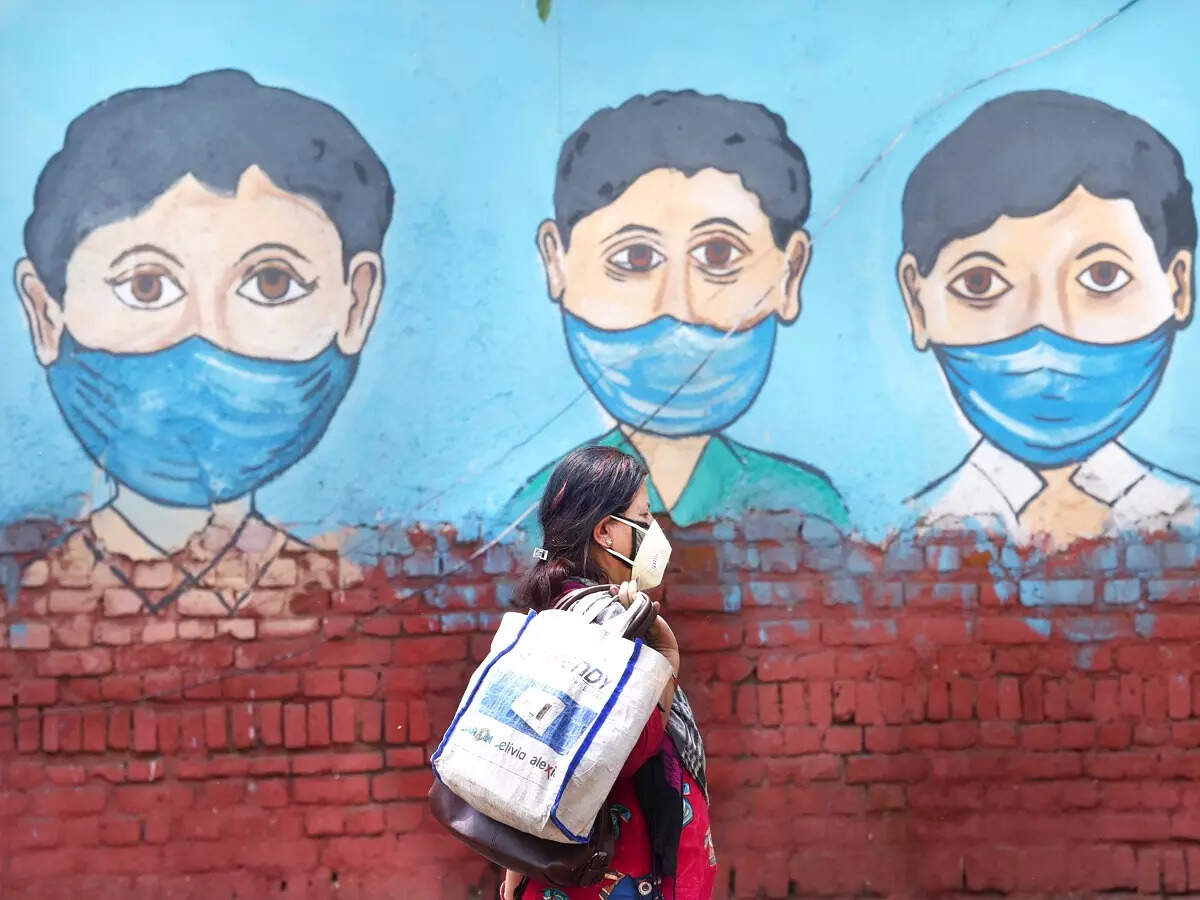
1 in 3 Indians continue to refrain from carrying masks when stepping out: SurveyNEW DELHI: Mask compliance continues to remain at its lowest in India despite concerns over detection of Omicron variant in the country, with only 2 per cent of surveyed citizens saying that people in their area, city or district are complying well with mask-wearing norms.

According to a latest survey conducted by digital community based platform LocalCircles, one in three Indians say most people in their area are not even carrying masks when stepping out of their houses.

The survey, conducted in April, received more than 25,000 responses from citizens residing in 364 districts of India.

It also said that 29 per cent of citizens rated mask compliance as high. This percentage dropped to 12 per cent in September, and dropped drastically to only 2 per cent in November.

The need of the hour is to educate the public on the effectiveness of masks as two in three Indians are still wearing cloth masks that provide limited protection from COVID-19.

“It is critical that the central government, state governments and district administrations introduce all possible mechanisms to create awareness about mask compliance in light of the Omicron variant and enforce necessary penalties to drive this compliance,” Sachin Taparia, founder, LocalCircles said.

If two individuals in an indoor space are not wearing a mask, in just 10 minutes, the infected person can transmit the virus to the other person, while if both are wearing a fitted N-95 mask, it requires over 600 hours of exposure for transmission, he said.

The Omicron variant, which has scientists and epidemiologists from around the world raising red flags, was categorised as a “variant of concern” by the World Health Organisation earlier this week after it was identified in three countries.

Within a week, Omicron has been detected in over 40 countries around the world, with India reporting its first two cases in Karnataka.

News Source link

Biocon gets USFDA nod for generic product

Biotechnology major on Thursday said its unit has received approval from the US health regulator to market a generic product.

Biocon Pharma, a subsidiary of the company, has received approval from the US Food and Drug Administration (USFDA) for its abbreviated new drug application (ANDA) for Mycophenolic Acid, the company said in a regulatory filing.

The product is indicated for the prophylaxis of organ rejection in adult patients receiving a kidney transplant and is available in 180mg and 360mg strengths.

This approval further adds to Biocon’s portfolio of vertically integrated complex drug products, the company noted.

News Source link

Government starts free teleconsultation service on WhatsApp, here’s how you can access it, Health News, ET HealthWorld

Government starts free teleconsultation service on WhatsApp, here’s how you can access itThe Common Services Center (CSC) scheme by the Ministry of Electronic and Information Technology has announced a dedicated helpline on WhatsApp called ‘CSC Health Services Helpdesk’ aimed to provide teleconsultation solutions for people including in rural and remotest parts of the country. The helpdesk on WhatsApp is said to make it easy for people to seek support from administration, consult with doctors, access a wide range of Covid related resources and get their queries addressed.

How to access CSC Health Services Helpdesk on WhatsApp

The CSC Health Services Helpdesk on WhatsApp is free to use and will be available in Hindi and English. To access the helpdesk, WhatsApp users need to send a ‘Hi’ message to the number +917290055552 and select the options to get connected to a doctor.

According to CSC, the helpdesk has been developed as an important and easily accessible extension of its goal to deliver healthcare services through channels that are socially, financially and digitally inclusive. It claims that the WhatsApp helpdesk will guide users to an appropriate doctor based on their specific health requirements across the areas of general health as well as related to Covid-19.

“We are deeply committed in ensuring that rural citizens get the best access to healthcare and infrastructural services. CSC’s tele-health consultation has played an important role in providing primary healthcare services at the grass-root level. We are confident that an extension of this on WhatsApp will be our next lever in ensuring that primary healthcare services are available to the remotest population in our country.” said Dinesh Kumar Tyagi, CEO, CSC e-Governance Services India Limited.

“This chatbot has been uniquely built as a customised solution which will be beneficial for providing common services to people in India.We are thankful to WhatsApp for their collaboration, determination and all round support to make this chatbot so easy and seamless to use for people of India.” he added.

News Source link

Kamal Haasan Fully Recovers From COVID-19

Veteran star Kamal Haasan, who was diagnosed with coronavirus a few days back, has now fully recovered.

On Wednesday, a hospital treating him issued a statement regarding Haasan’s health update.

“Mr Kamal Haasan, who has been admitted to SRI Ramachandra Medical Centre on 22nd November 2021 was COVID positive. He had mild COVID for which he was treated,” Dr Suhas Prabhakar, Medical Director, Sri Ramachandra Medical Centre, said.

The doctor also informed that Haasan will be in isolation for a few more days.

“He has fully recovered but advised to be on isolation until 3rd December 2021. He will be fit to resume his routine work from 4th December 2021,” the statement read.

Haasan, the Makkal Needhi Maiam Chief, contracted coronavirus last week.

On November 22, he had taken to Twitter to reveal his diagnosis.

“Had a slight cough after returning from US trip. COVID-19 infection was confirmed after the test and I got isolated at the hospital,” Haasan had tweeted. 

News Source link

India’s Revised Guidelines For International Travellers Begins From Tomorrow — Know Details

New Delhi: In the midst of worldwide concern about the Omicron variant, the Centre released new criteria for international arrivals in India on Sunday, which will take effect tomorrow, December 1, 2021. Travellers from ‘countries at-risk’ will be required to take the Covid test after arrival and wait for the results at the airport, according to the updated guidelines.

The previous guidelines have been updated in light of the World Health Organization’s classification of a new variation of SARS-CoV-2 (B.1.1.529; dubbed Omicron) as a ‘Variant of Concern’ on Friday, citing the fact that it has a high number of mutations (32), potentially making it more transmissible and hazardous. The WHO has given it the name Omicron, which is the Greek alphabet’s 15th letter.

The following are the amended guidelines:

i. Before their booked flight, travellers must complete the self-declaration form on the online Air Suvidha Portal and provide the last 14 days of travel data.

ii. Passengers from “at-risk” nations will be tested for Covid upon arrival and will be unable to leave the airport until the results of their RT-PCR tests are ready.

iii. If they are found to be negative, they will be subjected to a seven-day home quarantine before being re-tested on the eighth day. If they are confirmed to be negative, they will be subjected to additional self-monitoring for the next seven days.

iv. Before embarking on their flight, passengers must also upload their negative RT-PCR test results to the Air Suvidha webpage. The test report should be no more than 72 hours old before embarking on the journey. 

v. The United Kingdom, South Africa, Brazil, Bangladesh, Botswana, China, Mauritius, New Zealand, Zimbabwe, Singapore, Hong Kong, and Israel are among the ‘countries at risk,’ according to the Union Health ministry.

vii. After arrival at the airport, 5% of the total aircraft passengers will be randomly examined.

viii. The Delhi International Airport has made provisions to hold up to 1,500 international travellers at a time, including those from ‘countries at-risk,’ until the results of their RT-PCR testing performed after arrival are reported.

ix. Each traveller who submits to the RT-PCR test will be charged around Rs 1,700. 

x. The existing rules have been changed in light of the revelation of a new variety of SARS-CoV-2 known as Omicron (B.1.1.529), which the World Health Organization (WHO) has now categorised as a “Variant of Concern”.

News Source link

Study questions efficacy of homoeopathy medicine given to prevent COVID- The New Indian Express

By Express News Service

THIRUVANANTHAPURAM: The scientific community, which has advocated against the use of controversial homoeopathic drug Arsenicum album 30C (Aa30C) against COVID, got a shot in the arm after a new research found that the drug has no such preventive effect.

The international study carried out by a group of homoeopathy researchers from the USA and India found that Aa30C showed no efficacy against COVID. The conclusions of the study carried out among 2,300 patients was published in the journal, ‘Homeopathy’, on September 30.

The health activists who have been advocating evidence-based medicines said the government should rethink its strategy to give Aa30C  to people for preventing COVID. Lakhs of school students have taken Aa30C to boost immunity as part of the government-promoted programme ahead of school reopening in November.

The government decided to go ahead with the Aa30C distribution to children despite the protest from the scientific community. According to them, the rationale behind the distribution was based on the flimsy findings of a study conducted in Pathanamthitta in July.

“The conclusion from the so-called Pathanamthitta experiment was made after conducting a study in just 16 persons. The study has a faulty design and mired in data manipulation. In the wake of the new findings, the homoeopathy department of Kerala now must come up with fresh scientific evidence to support its programme of supplying AA30c among schoolchildren which was pushed only because of tall claims of efficacy,” said Arif Hussain Theruvath, a former homoeopathy consultant.

 The health activists have approached the Supreme Court questioning the efficacy data and safety studies on Aa30C. The Ministry of AYUSH issued an advisory to use Aa30C as a preventive and prophylactic (intended to prevent disease) drug on March 6, 2020.

Kerala Sasthra Sahitya Parishad, in a letter to the chief minister, said Arsenic Trioxide used in making Arsenicum album 30 CH is a poison and any mistake while making the product in large quantities could be harmful. The state chapters of Indian Medical Association and Indian Academy of Pediatrics and CAPSULE have appealed to the government to rescind the decision to give Arsenicum album 30 CH to children.

News Source link

Coinstore cryptocurrency exchange enters India despite pending curbs on trade | Technology News

New Delhi: Singapore-based virtual currency exchange Coinstore has begun operations in India at a time when the Indian government is preparing legislation to effectively bar most private cryptocurrencies.

Coinstore has launched its web and app platform and plans branches in Bangalore, New Delhi and Mumbai which will act as its base in India for future expansion, its management said.

“With nearly a quarter of our total active users coming from India, it made sense for us to expand into the market,” Charles Tan, head of marketing at Coinstore told Reuters.

Asked why Coinstore was launching India despite the pending clampdown on cryptocurrencies, Tan said: “There have been policy flip-flops but we hope things are going to be positive and we are optimistic that the Indian government will come out with a healthy framework for cryptocurrencies.”

The New Delhi government is planning to discourage trading in cryptocurrencies by imposing hefty capital gains and other taxes, two sources told Reuters earlier this month.

It has said that it will allow only certain cryptocurrencies to promote the underlying technology and its uses, according to a legislative agenda for the winter session that is set to start later this month.

Tan said Coinstore plans to recruit about 100 employees in India and spend $20 million for marketing, hiring and development of crypto-related products and services for the Indian market.

Coinstore is the second global exchange to enter India in recent months, following in the footsteps of CrossTower which launched its local unit in September.

The price of the world`s biggest cryptocurrency, Bitcoin, has more than doubled since the start of this year, attracting hordes of Indian investors.

Industry estimates suggest there are 15 million to 20 million crypto investors in India, with total crypto holdings of around 400 billion rupees ($5.33 billion). Also Read: BGMI Update: Krafton introduces 3 hours playtime limit, check other restrictions


Coinstore also plans to expand into Japan, Korea, Indonesian and Vietnam, according to Tan. Also Read: Microsoft’s GitHub faces major outage! Service back online after 2 hours of interruption

Live TV

#mute

News Source link

Is use of aspirin linked with increased risk of heart failure? | Health News

According to a new research, taking aspirin is associated with a 26 per cent increased risk of heart failure. The other factors associated with it are smoking, obesity, high blood pressure, high cholesterol, diabetes and cardiovascular disease.

The findings of this research have been published in the ESC Heart Failure Journal. “This is the first study to report that among individuals with a least one risk factor for heart failure, those taking aspirin were more likely to subsequently develop the condition than those not using the medication,” said study author Dr Blerim Mujaj of the University of Freiburg, Germany.

“While the findings require confirmation, they do indicate that the potential link between aspirin and heart failure needs to be clarified,” Mujaj added.

The influence of aspirin on heart failure is controversial. This study aimed to evaluate its relationship with heart failure incidence in people with and without heart disease and assessed whether using the drug is related to a new heart failure diagnosis in those at risk.

The analysis included 30,827 individuals at risk for developing heart failure who were enrolled from Western Europe and the US into the HOMAGE study.

“At-risk” was defined as one or more of the following: smoking, obesity, high blood pressure, high cholesterol, diabetes and cardiovascular disease. Participants were aged 40 years and above and free of heart failure at baseline. Aspirin use was recorded at enrolment and participants were classified as users or non-users. Participants were followed up for the first incidence of fatal or non-fatal heart failure requiring hospitalisation. The average age of participants was 67 years and 34 per cent were women.

READ | Post-COVID cardiac care is important, says health expert

At baseline, a total of 7,698 participants (25 per cent) were taking aspirin. During the 5.3-year follow-up, 1,330 participants had developed heart failure. The investigators assessed the association between aspirin use and incident heart failure after adjusting for sex, age, body mass index, smoking, alcohol use, blood pressure, heart rate, blood cholesterol, creatinine, hypertension, diabetes, cardiovascular disease, and treatment with renin-angiotensin-aldosterone-system inhibitors, calcium channel blockers, diuretics, beta-blockers and lipid-lowering drugs.

Taking aspirin was independently associated with a 26 per cent raised risk of a new heart failure diagnosis. To check the consistency of the results, the researchers repeated the analysis after matching aspirin users and non-users for heart failure risk factors. In this matched analysis, aspirin was associated with a 26 per cent raised risk of a new heart failure diagnosis. To check the results further, the analysis was repeated after excluding patients with a history of cardiovascular disease. In 22,690 participants (74 per cent) free of cardiovascular disease, aspirin use was associated with a 27 per cent increased risk of incident heart failure.

Dr Mujaj said, “This was the first large study to investigate the relationship between aspirin use and incident heart failure in individuals with and without heart disease and at least one risk factor. Aspirin is commonly used – in our study one in four participants were taking the medication. In this population, aspirin use was associated with incident heart failure, independent of other risk factors.”

He concluded, “Large multinational randomised trials in adults at risk for heart failure are needed to verify these results. Until then, our observations suggest that aspirin should be prescribed with caution in those with heart failure or with risk factors for the condition.”

Live TV

News Source link