
Home / Health (page 7)

Health

Health

Optic Neuritis – American Association for Pediatric Ophthalmology and Strabismus

Print Version

What is optic neuritis?

Optic neuritis is inflammation of the optic nerve [See figure 1]. As the photo demonstrates, the optic nerve becomes swollen and the blood vessels become distended. This inflammation can cause loss of vision because the optic nerve is responsible for carrying visual information from the eye to the brain to produce visual images.  In chronic disease, the optic nerve may appear paler.

HIh45rd3RfmSICKqejhi__217_opticneuritis1.jpg

Fig. 1: Optic nerve swelling in a patient with optic neuritis.

What are the symptoms of optic neuritis?

The first symptom of optic neuritis in a child is most commonly a rapid, often profound decrease in vision (visual acuity less than 20/400). It can occur in one eye or both eyes.  Many children are unaware of the loss of vision if only one eye is affected, but involvement of both eyes is more common in children.  Patients may also have headaches and pain with eye movement. There may be a decrease in color perception, brightness, and/or in the field of view (side vision).  Some children have other neurologic symptoms in other parts of the body, such as weakness or numbness.  Many children with optic neuritis have a history of a fever, flu-like illness, or immunizations 1-2 weeks prior to the onset of the decreased vision.

What causes optic neuritis?

Optic neuritis is thought to be an autoimmune disorder, in which the immune system mistakenly attacks the body’s own optic nerve tissue. The attack of the immune system causes inflammation, swelling and impaired function of the optic nerve. The trigger for this immune reaction may be a viral illness, recent immunization, infection around the optic nerve, multiple sclerosis, or other neurological problems.

How is optic neuritis diagnosed?

A careful history including asking about recent illness, fever, neurological symptoms, or recent immunizations is helpful. The Eye physician checks vision (which is usually markedly decreased) and evaluates optic nerve function including the pupil reactions, color vision, and peripheral vision. The Eye physician also examines the optic nerve closely for swelling and dilated blood vessels. An ultrasound of the optic nerve, called ocular coherence tomography (OCT) may further define the swelling, give clues to the diagnosis, and be used to look for improvements over time.  Other tests performed may include an MRI, a spinal tap (lumbar puncture), and blood tests looking for infectious causes of inflammation.  Tests for specific antibodies including myelin oligodendrocyte glycoprotein (MOG-Abs) and aquaporin 4 (AQP4-IgG or NMO-IgG) may lead to a more specific diagnosis with altered treatment.

What is the prognosis and treatment for optic neuritis?

Fortunately, most children with optic neuritis recover much of their vision. This usually occurs spontaneously, and treatment may not be necessary. Recovery usually begins within a few weeks and can continue for several months. Intravenous corticosteroids may speed the recovery of vision, but probably do not improve the final visual outcome. If a specific disease is thought to cause the optic neuritis, treatment is modified.  Unfortunately, a small percentage of children do not recover vision.

What are the differences between optic neuritis in children and adults?

Both eyes are usually affected in children, while adults usually have only one eye affected. Children with optic neuritis usually have a history of recent illness or immunization and adults do not. Both adults and children have an increased risk of multiple sclerosis if they develop optic neuritis, but children have much less risk.  The Pediatric Optic Neuritis Prospective Outcomes Study preliminary data revealed 76% of children regained 20/20 vision at 6 months, but more specific data should be forthcoming.

Lock JH, Newman NJ, Biousse V, Peragallo JH. Update on pediatric optic neruritis. Curr Opin Ophthalmol 2019(6): 418-425

Updated 10/2019

#Conditions
News Source link

India at UN, Health News, ET HealthWorld

Sustainable recovery from COVID-19 pandemic should begin with vaccines: India at UNNew York: Emphasising that following the emergence of the Omicron variant, India had immediately offered support including supplying made vaccines to the affected countries in Africa, India at the UN said that sustainable recovery from the pandemic should start with vaccines.
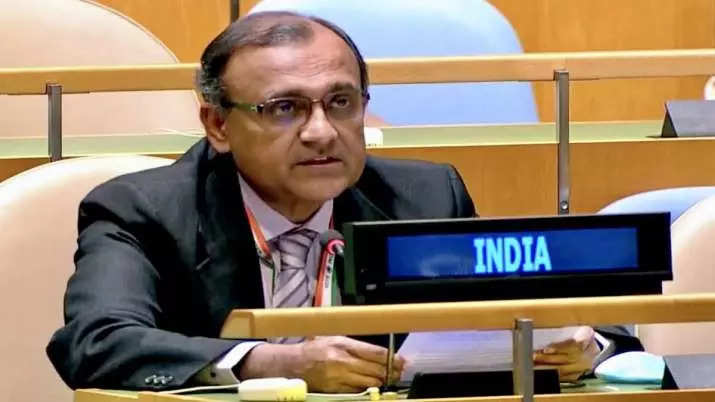
“Following the emergence of the Omicron variant, India had immediately offered support to the affected countries in Africa, including by supplying made-in-India vaccines, essential life-saving drugs and medical equipment,” said India’s Permanent Representative to UN TS Tirumurti during a joint PBC-ECOSOC meeting on ‘promoting durable peace and sustainable development in the context of recovery from COVID-19 pandemic’.

“If we need to have any sustainable recovery from the pandemic, it should start with vaccines,” he added.

Stressing to ramp up the production capacity of vaccines, the Ambassador said that it is essential that global supply chains of raw materials be kept open.

Tirumurti also emphasised human-centric and citizen-friendly digital tech saying these need to be promoted with a special focus on women and youth.

His focus on vaccines come at a time COVID-19 cases are again in the surge in many parts of the world due to coronavirus’ new variant Omicron, which WHO said could be the cause of the increase in infections and hospitalisations in the near future.

News Source link

Hong Kong researchers urge third COVID-19 shot after new Omicron study, Health News, ET HealthWorld

Hong Kong researchers urge third COVID-19 shot after new Omicron studyHONG KONG: Researchers in Hong Kong have urged people to get a third dose of COVID-19 vaccine as soon as possible, after a study showed insufficient antibodies were generated by the Sinovac and BioNTech products to fend off Omicron.

Tuesday’s release of the results of a study by scientists in the microbiology department of the University of Hong Kong was the first published preliminary data on the impact of Sinovac’s vaccine against the Omicron variant of coronavirus.

None of the serum of the 25 Coronavac vaccine recipients contained sufficient antibodies to neutralise the new variant, according to the study, accepted for publication in the journal Clinical Infectious Diseases, the researchers said.

Just five of 25 BioNTech vaccine recipients had neutralising ability against Omicron, and vaccine efficiency was reduced significantly to 20% to 24%, the study found.

“The public is advised to get a third dose of the vaccine as soon as possible while waiting for the next generation of a more matched vaccine,” the researchers said in a news release.

The fast-spreading Delta variant remains dominant worldwide, and it is unclear if Omicron is inherently more contagious, the World Health Organization (WHO) said in a brief on Sunday.

Scientists say it is still too early to know if Omicron causes more or less severe COVID-19 than previous variants.

A study of real-world data published on Tuesday showed Pfizer-BioNTech’s COVID-19 vaccine was less effective in South Africa at keeping out of hospital those infected with the virus since the Omicron variant emerged last month.

Last week, the two firms said a three-dose course of their vaccine had neutralised Omicron in a laboratory test, an early sign that booster shots could be key for protection against it.

(Reporting by Greg Torode and Hong Kong bureau; Editing by Clarence Fernandez)

News Source link

HealthPlix releases AI powered prescription summary dashboard for doctors, Health News, ET HealthWorld

HealthPlix releases AI powered prescription summary dashboard for doctorsBengaluru: HealthPlix Technologies, an AI-powered EMR software today, announced the release of the Prescription Summary Dashboard (PSD) for doctors. The AI feature helps doctors to use real-time analytics and analyse their historical prescriptions within a few clicks and enable them to identify different cohorts of patients and the treatment given to them.

The PSD, a user-friendly interface model, is said to be a research-oriented platform that helps deep dive into a patient’s medical history. This dashboard provides an overview of complete practice with an aggregated analysis of prescriptions, allowing doctors to elevate their engagement with patients. Backed with analytics capabilities it allows doctors to find areas of improvement to drive better patient outcomes.

Throwing light on the software, Sandeep Gudibanda, CEO, Healthplix Technologies says that the ability to provide doctors with a simple visual representation of a patient’s prescription history that is backed by analytics has the potential to drive better health outcomes and transform the doctor-patient relationship. Informed that PSD strives to equip doctors with analytical tools that are focused around mapping a patient’s longitudinal health journey.

This prescriptive analytics makes use of patient health information to assist doctors in advanced treatment planning, assessing high-risk patients and dealing with a large amount of patient information in a much efficient way. It further helps in predicting patients who are at greater risk and connect with them proactively to minimize it.

Commenting about the technology, Chaitanya Raju, Chief of AI, said, “Currently, doctors have no way of obtaining information on the medications administered to a specific cohort of patients and it is a time-consuming process with the potential for misinterpretation. The prescription summary dashboard is a one-click deep dive analysis tool for doctors making patient care more efficient. It will help doctors with solutions that will help them save time, provide superior care, and improve the in-clinic experience.”

Major public health incidents such as COVID-19 have the characteristics of being uncertain, sudden, and hazardous and analytics tools such as the PSD bring in a new aspect for doctors in anticipating developments, responding to incidents with speed, precision, and agility leading to efficient patient treatment and control over their health.

News Source link

Over 81,000 health and wellness centres operationalised in India: Union minister

More than 81,000 health and centres (HWCs) have been operationalised in the country and the target of 1.1 lakh HWCs will be achieved by the end of March 2022, Minister of State for Health Bharati Pravin Pawar said on Monday.

Building a healthcare system that is resilient and sturdy forms the foundation of Prime Minister Narendra Modi’s vision of “Aatmanirbhar Bharat” (a self-reliant India), Pawar said while chairing the “Universal Health Coverage Day, 2021” ceremony and a daylong workshop of technical discussions on the theme “Leave No One’s Health Behind: Invest in Health Systems For All” here, a statement issued by the health ministry said.

The minister said with a focus on the provisioning of quality healthcare, covering the primary, secondary and tertiary spheres, the government launched the all-encompassing Ayushman Bharat Yojana in 2018 with the goal of “Sabka Saath, Sabka Vishwas” in mind, the statement said.

While primary healthcare with the aim of providing services close to the community was launched in 2018, this was strengthened with the AB-PMJAY in September 2018 and the Ayushman Digital Mission and the Prime Minister Ayushman Bharat Health Infrastructure Mission this year.

“The focus is on wellness and quality of care,” Pawar said.

She noted that while COVID-19 led to a delay in several activities all over the world, in India, the work on the HWCs picked up pace despite the pandemic. More than 81,000 HWCs have been operationalised and the target of 1.1 lakh will be achieved by the end of March 2022, the minister added.

“We are moving ahead to meet the goal of Universal Health Coverage with a ‘Whole of Society’ approach with Sahbhagyata and Sankalp,” she was quoted in the statement as saying.

Pawar expressed her gratitude and appreciation to all the healthcare workers for their exemplary work during the challenging times of COVID-19.

“The concept of ‘Health For All’ is a guiding motto under which we work as health soldiers,” she said.

The Union minister congratulated the states, the frontline and healthcare workers and the development partners for the administration of more than 133 crore vaccine doses under the nationwide Covid inoculation drive.

She felicitated the states under the categories of “Best AB-HWC — Primary Healthcare Team Awards”, “Best Performing state/UT under Azadi ka Amrit Mahotsav”, “Screening of NCDs and common cancers at AB-HWCs”, “Creation of Digital Health IDs” and “PMJAY-NHA Awards”, the statement said.

Pawar also launched a coffee-table book on good and replicable healthcare practices, and training manuals for primary healthcare teams on an expanded package of services.

A text message feature was also launched under the NPCDCS programme, which will help create awareness on non-communicable diseases, according to the statement.

News Source link

Cet Aspirants Missing Out On Seats, Health News, ET HealthWorld

NEET counselling delay: CET aspirants missing out on seatsBENGALURU: Hundreds of aspirants are in a dilemma this year because of the lack of coordination between various agencies. While CET and NEET counselling for engineering and medical seats, respectively, used to be held parallelly every year, it has not been so this time, leaving the decision-making process extremely tough for students and robbing them of chances of a better seat.

Every year, after the first round of engineering counselling, counselling for NEET is held. So students who get medical seats give up their engineering ones, which get back into the seat pool and become available for the second round of engineering counselling. However, this year, with NEET counselling delayed owing to a Supreme Court case, medical students who have written CET are holding on to their seats.

“Usually, by the second round of counselling, a few thousands of seats in good colleges come back into the pool and we get a chance at a better college. However, that is not happening this time and we’re losing out on precious seats,” said a student.

Karnataka Examinations Authority (KEA) has sought the government’s permission to hold a casual vacancy round in January, where these students will get a chance to pick the vacant seats. However, Visvesvaraya Technological University has already released the academic schedule for first year, with classes starting on December 13.

Also, students argue that another round as late as in January will not help. “We cannot afford to wait till January to join a college. Two months of classes will be over by then. VTU is already in a hurry to finish portions on time and said there will be 10 hours of daily classes apart from Saturdays. Professional courses are not easy and children can’t afford to lose so many classes. We’ll have to give up the chance of a better seat, better placement and better future because of this confusion,” said a parent.

Another parent said the seat will come back to the pool if there is an extended round. “…But who’ll wait till then for the seats? None would want to take a chance and will seal seats now. Good seats will go to less meritorious students,” he said.

Terming it unfortunate, another student said the government isn’t doing anything to help students. Various agencies – Medical Counselling Committee, Karnataka Examination Authority and Visvesvaraya Technological University – should have worked together,” said a student.

A former KEA official said it is up to VTU to now provide bridge courses and extra classes for students who join in late. “The higher education department can also make a change in rules by allowing students to take a transfer between colleges after the extended round. This will benefit students. A little coordination is all that is required,” he said.

News Source link

Andhra Pradesh Records First Case Of Omicron Variant Of Coronavirus

New Delhi: A 34-year-old foreign traveller who came from Ireland has tested positive for Covid-19 on November 27 and when his samples were sent to CCMB, Hyderabad for genome sequencing, it has resulted in him being infected with Omicron variant.

However, he didn’t have any symptoms and after a fortnight that is on Saturday, December 11, he was retested and the RT-PCR result was found to be negative for Covid-19. There are no other Omicron cases in the state, stated a release by Director Public Health of Government of Andhra Pradesh.

He first reached Mumbai and there he has tested negative for the Covid-19 RT-PCR test. Then he was allowed to travel further and on reaching Vizianagaram, he was retested where he tested positive for Covid-19. Later through detailed genome sequencing, it was clarified that the Ireland traveller was positive for the Omicron variant of Covid-19.

This is the first Omicron case identified in Andhra Pradesh. There were 15 travellers, who came from foreign countries have tested positive for Covid-19 but none of them had traces of the Omicron variant.

The AP government’s Director of Public Health advised the people in a release that people should continue to take precautions and shouldn’t fail to follow Covid norms.  

With this case in Andhra Pradesh, the national tally of Omicron variants has reached 35.

Andhra Pradesh Records First Case Of Omicron Variant Of Coronavirus

News Source link

Centre Writes To States/UTs, Directs Districts Reporting High Covid Positive Rates To Be Monitored Very Closely

New Delhi: Union Health Secretary Rajesh Bhushan has written to the chief secretaries and administrators of all states and Union Territories stating the 27 districts in 10 states and Union Territories reporting high Covid positive rates in the past two weeks need to be monitored very closely.

“In this context, it is imperative for all States/UTs to maintain a strict watch on the situation with focused district level measures for containment of clusters of new positive cases as per the guidelines,” said Bhushan.

“In case of any district reporting a surge in cases or rise in positivity rates, intensive action and local containment as per the contentment framework must be initiated,” he added.  

The Health Secretary said the strategic containment interventions in identified areas in case of Covid clusters, include night curfews, restricting gathering of people, congregation and curtailing attendees in marriages and funerals, ANI reported.

Bhushan further said the testing and surveillance interventions include ramping up testing and active case search, testing of all ILI (influenza-like illness) and SARI (severe acute respiratory infections) cases through Rapid Antigen Tests (RAT) and re-testing by RTPCR of symptomatic RAT negative tests.

“Strict adherence to COVID appropriate behaviour at all places and at all times must also be rigorously enforced and aggressively monitored. Adequate advance information to community highlighting the need for stringent containment actions to achieve community involvement and support are also mandated in the framework issued by MoHFW (Ministry of Health and Family Welfare),” Bhushan said.

“The aforesaid actions may also be reviewed regularly at your level to ensure strict adherence to MHA and MoHFW Guidelines,” he added.

News Source link

Twitter Update: Soon you will be able to add content warnings to posts | Technology News

New Delhi: Under the new CEO Parag Agrawal, Twitter is doubling down on efforts to sanitise its platform and now, the micro-blogging platform is piloting a new feature that will let users add specific content warnings to individual photos and videos sent out in tweets.

Currently, Twitter users can add content warnings to tweets but it happens with all of their tweets and not specific ones regardless of whether the tweet has sensitive material or not.

“People use Twitter to discuss what`s happening in the world, which sometimes means sharing unsettling or sensitive content. We`re testing an option for some of you to add one-time warnings to photos and videos you Tweet out, to help those who might want the warning,” the company tweeted late on Wednesday.

Once you post the tweet with a warning, the image or video will appear blurred out, with a content warning explaining why you have flagged it.

Agrawal has already said that his top priority in the new role is to improve the company`s execution and streamline how the micro-blogging platform operates.

Twitter is also overhauling the way it handles problematic and abusive tweets reported by its users, aiming to bring a more `human first` approach to improve the quality of tweets flagged by its users for misinformation, hate speech, spam and others.

The new approach, which is currently being tested with a small group in the US, will be rolled out globally next year.

“It lifts the burden from the individual to be the one who has to interpret the violation at hand. Instead, it asks them what happened,” Twitter said in a statement. Also Read: PM Kisan Yojana: Farmers could get 10th instalment by December 25, here’s how to check name in list

This method is called `symptoms-first`, where Twitter first asks the person what`s going on. By refocusing on the experience of the person reporting the Tweet, Twitter hopes to improve the quality of the reports they get. Also Read: CBDT issues refunds worth over Rs 1,32,381 crore to 1.19 crore taxpayers

Live TV

#mute

News Source link

Seaweed may help stop COVID virus from infecting human cells: Study | Health News

Jerusalem: A substance extracted from edible marine algae may help stop the spread of coronavirus, according to a study. Researchers from Tel Aviv University (TAU) said ulvan, the major water-soluble polysaccharide extracted from the cell wall of green seaweed, could help stop coronavirus from infecting human cells, Jerusalem Post reported.

“The lack of access to vaccines takes the lives of many victims and even accelerates the creation of new variants,” said TAU’s Prof. Alexander Golberg.

“The study is still in its early stages, but we hope that the discovery will be used in the future to develop an accessible and effective drug, preventing infection with the coronavirus. Our findings at this stage arouse cautious optimism,” he added in the study published in PeerJ — a peer-reviewed science journal.

Because other research showed that certain seaweed compounds had antiviral properties, the team decided they wanted to evaluate them against Covid.

They then decided to test ulvan because it could be extracted from common seaweed.

“Ulvan is extracted from marine algae called Ulva, which is also called ‘sea lettuce’, and is food in places like Japan, New Zealand and Hawaii,” Golberg said. “It has previously been reported that ulvan is effective against viruses in agriculture and also against some of the human viruses – and when coronavirus arrived, we asked to test its activity.”

They grew Ulva algae, extracted the ulvan from it and sent it to the Southern Research Institute in Alabama. There, the US team built a cellular model to assess the activity of the substance produced in Golberg’s laboratory.

The cells were exposed to both the coronavirus and to ulvan. It was found that, in the presence of ulvan, the coronavirus did not infect cells. “In other words,” he said, “ulvan prevents the cells from being infected with coronavirus.”

He stressed that the best thing would be to vaccinate the world. However, it has become clear that this is unlikely to happen — at least quickly.

“As long as billions in the low-income world do not have access to the vaccines the virus is expected to develop more and more variants, which may be resistant to vaccines – and the war against the coronavirus will continue,” Golberg said. “For this reason, it is very important, for the sake of all mankind, to find a cheap and accessible solution that will suit even economically weak populations in developing countries.”

News Source link