Home / Health (page 32)

Health

Health

MBBS students, interns to be roped in for COVID hospitals in Delhi, Health News, ET HealthWorld

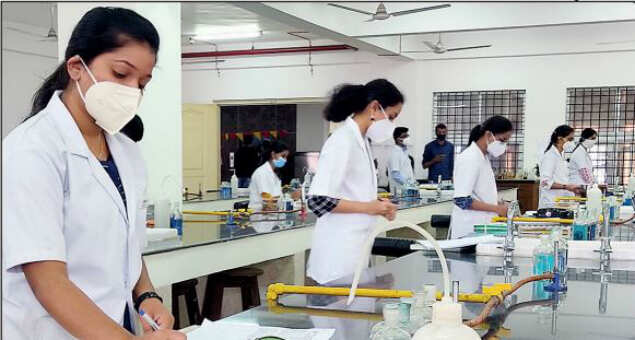
New Delhi:MBBS students, interns to be roped in for COVID hospitals in Delhi In order to meet the increased demand for manpower during the ongoing COVID pandemic, all Delhi Government hospitals are directed to engage 4th and 5th-year MBBS students, interns and BDS doctors to assist in the treatment of COVID affected patients.

“In view of the surge of COVID pandemic and to meet the demand of increased manpower, the Medical Directors/Medical Superintendents/Directors of all COVID Hospitals of Government of NCT of Delhi are authorized to engage 4th and 5th-year MBBS students, Interns and BDS pass Doctors as per the provisions of order No. 52/DGHS/PH-IV/COVID-19/2020/ss4hfw/1144 dated 18.11.2020 issued by this Department”, read the order by the Delhi government.

India on Saturday reported 1,45,384 new COVID-19 cases which is the highest daily spike in cases since the outbreak of the pandemic.

The single-day rise in coronavirus cases crossed the one lakh mark for the fourth consecutive day. Maharashtra continued to remain the worst-affected state in the country with 55,411 new COVID-19 cases taking the case count to 33,43,951. The state has 5,36,682 active cases.

In Delhi, where a night curfew is in place, 7,897 new COVID-19 cases were reported, along with 5,716 recoveries and 39 deaths.

News Source link

KGMU suspends many OPDs, restarts e-Sanjeevani facility, Health News, ET HealthWorld

Lucknow: KGMU suspends many OPDs, restarts e-Sanjeevani facilityLucknow: King George’s Medical University (KGMU) on Friday announced the suspension of OPDs of several departments from Monday till further orders in view of the exponential rise in Covid-19 transmission, which has also affected many staff members.

However, OPDs for some departments and emergency services will continue uninterrupted. KGMU also announced starting of e-Sanjeevani and superspeciality OPD services from Monday.

According to a statement released by the chief medical superintendent’s office, the departments which will continue to run OPDs include those dealing with oncology (cancer treatment) – surgical oncology, clinical hematology, radiation oncology, endocrine surgery (breast and thyroid malignancy) and medical oncology.

Other departments which will continue OPDs are paediatrics including neonatal care, nephrology OPD for dialysis, antenatal clinic for obstetric care, drug dispersion through ART centre RNTCP centres for HIV positive people and fever clinic for suspected Covid-19 cases.

Patients visiting these OPDs will have to take prior online appointments and bring Covid-19 negative reports along with their identity card. The attendant coming with the patient will also have to bring Covid negative report and ID.

Remaining departments will cater to patients through “digital OPD”. Patients can call on phone number 0522-2258880 which will have 30 lines connecting to various departments. These departments will offer consultation to patients requiring non-emergency advice.

Nodal in-charge, telemedicine, Dr Sheetal Verma said, “The app-based e-Sanjeevani system will run in collaboration with CDAC and NHM, UP. Patients need to download e-Sanjeevani app from Google play store. They can use the app to directly interact with the consultant of their choice. Every consultant will attend around 25-50 patients per day through digital medium.”

News Source link

India drug regulator asks Dr.Reddy’s for more data on Sputnik V COVID-19 vaccine

An expert panel of India’s drug regulator on Friday sought additional data from drugmaker Dr.Reddy’s Laboratories on its Sputnik V COVID-19 vaccine trial, in its second such request after an initial evaluation in February.

The committee asked the company to submit a comparative analysis of late-stage immunogenicity data from both its Indian studies and an ongoing Russian study, as well as data on serious adverse events and positive cases reported till date.

Dr.Reddy’s has been conducting small clinical trials with Sputnik V in India under a deal with Russia’s wealth fund. Several Indian companies have signed deals to produce and supply over half a billion doses of the vaccine.

News Source link

Sachin Tendulkar discharged hospital after recovering from COVID19 will be home quarantine had tested positive COVID19 on March 27

Indian cricketing legend Sachin Tendulkar has been discharged from hospital after recovering from the dreaded Coronavirus (COVID-19). The 47-year-old will be in home quarantine for few days. The legend had tested positive for COVID-19 on March 27.

Sachin had been hospitalized after he tested postive for Covid-19 recently. He was diagnosed with Corona on 27 March 2021. Tendulkar had informed abouut it on his Twitter account. 

The former India opener was recently seen in the Road Safety World Series. He tested positive shortly after the tournament completed in Raipur. Not just Tendulkar, but S Badrinath, Yusuf Pathan and Irfan Pathan who participated in the tournament also tested positive for Covid-19.

After the news was shared by Sachin on his Twitter, fans from around the world had sent him wishes for his good health. 

India recently celebrated 10 years of its victory in the ICC World Cup 2011. On this day, i.e on 2nd April, 2011 India lifted the cricket World Cup after 28 years of waiting. Sachin Tendulkar was the second highest run scorer in that tournament. 


News Source link

Atmantan launches health-tech platform; soon to add new properties, Health News, ET HealthWorld

Atmantan launches health-tech platform; soon to add new propertiesAtmantan Wellness Centre announced the launch of ‘Atmantan Naturals’, a health tech platform that will provide consultations and high efficacy herbal and nutritional supplements. The brand new range of nutraceutical supplements ‘Naturals’ were only available earlier for the in-house guests. Atmantan Naturals shall be a separate entity foraying into the commercial world.

“While the VUCA like situation continues in the immediate short future, we see our growth coming from our well-tech ventures like Atmantan Naturals and operations and management income from new properties,” said Nikhil Kapur, Founder & Director, Atmantan Naturals.

Naturals is aiming to add 40-50K clients in the first year. “Our concept and platform enable clients to remain loyal to the service and products and hence we do see repeat purchases. The average ticket size should be INR 1300. Naturals have big potential in India and overseas. While we have gone live with 15 products, we will be adding another 15 products soon,” Kapur stated.

Atmantan Wellness Centre is also actively involved in talks with a few properties that want to create more value for their guests by introducing wellness experiences. “Besides Atmantan Wellness Centre, Mulshi, we are in advanced talks with at least two hoteliers in India who want to convert their existing hotel into a wellness resort/centre. When we sign up these hotels, we will be their operating and management partners. This will see an additional revenue stream for us,” Kapur informed.

Kapur’s outlook on the wellness sector is strong however, what happens during the pandemic is critical. “Our focus remains on keeping our highly skilled and passionate team together. We have had a 100% success rate here. Also, we are communicating with our guests and understanding their view on the pandemic, how it’s changed their life and what they will expect from us when they visit us next,” he added.

Pandemic has manifold increased awareness of the need for being in good health. “For the first time we are seeing travellers who want to treat their chronic ailments and we are seeing guests from smaller cities travelling for a health holiday. It has thrown up opportunities especially in the tech space more prominently,” he believed.

News Source link

Covid-19 Surge: Chhattisgarh Govt Imposes ‘Complete Lockdown’ In Raipur From April 9

Raipur: Bogged by the Covid-19 second wave, a complete lockdown has been imposed in Chhattisgarh’s capital Raipur from April 9 to April 19. As per the announcement made by administration, the lockdown restrictions will begin in the city from 6 pm onward on April 9. 

The decision to impose complete lockdown in Raipur comes hours after Chhattisgarh on Tuesday reported 9,921 cases in the last 24 hours, the highest single-day spike since the outbreak of infection in March last year.

Covid-19 infection in Raipur itself has reached 76,427, including 1,001 deaths.

What Will Remain Closed During Raipur Lockdown

During the imposed lockdown period, all government, private and commercial establishments will remain closed. Even grovery and vegetable shops will not be allowed to function fully. The authorities have stated that milk supply could only be done in two hours (two times) daily.

What Willl Remain Open During Raipur Lockdown

As per the announcement, only petrol pumps and chemist shops will be allowed to function during this period. Even media professionals have been adviced to not move out unless necessary.

Those having special passes will be allowed to move around in the city, rest must stay at home during the lockdown period.

Industrial and construction activities have been allowed with a strict condition that workers deployed at the site follow all safety protocols.

ALSO READ | ‘Night Curfew In Entire Punjab Till April 30’: What’s Shut & Open

The announcement of complete lockdown in the capital city was announced after Chief Minister Bhupesh Baghel held a meeting with senior health officials to review Covid-19 situation in the state. During his meeting, Baghel also inquired about adequate availability of hospital beds for Coronavirus patients in the state.

According to the official figures, Chhattisgarh’s overall Covid-19 tally has now touched 3,86,269-mark with a total of 4,416 deaths. The number of active cases in the state stood at 52,445 till Tuesday, while 3,29,408 patients have recovered.

News Source link

How to build a healthy world- The New Indian Express

Express News Service

Ahead of World Health Day (April 7), we speak to a few stakeholders on what can be done in ‘Building a fairer, healthier world’ — the World Health Organisation’s theme for the day this year.

Dr Geeta Grewal, Chief Consultant and Cosmetic Surgeon, 9Muses Wellness Clinic
Most people are unaware of how food affects their health and go on abusing their bodies by consuming junk food till disease is manifested in their body. The onus of educating the public about the importance of healthy nutrition lies both with healthcare workers as well as government. Each doctor has to play a role in it, and talk about the importance of good food habits to each and every patient, irrespective of the malady he/she has come with. The government must enforce some regulations on ads of soft drinks and junk food – these products are endorsed by celebrities and hugely impact impressionable minds. Shop-owners should not be allowed to stock sugar-loaded junk foods at the entrance as it acts as an enticement.

Dr Tanveer Aujla, Senior Obstetrician & Gynaecologist, Motherhood Hospital, Noida
The pandemic has brought forth the fact that the world is unfair when it comes to the right to good health, but this is totally preventable. Everyone’s life should have living and working conditions that are conducive to good health. Various stakeholders in the health sector must work towards achieving this goal of a fairer and healthier world, and serve the community at their individual levels, such as holding free camps, giving free consultation and performing free surgeries wherever and whenever required.

Dr Aswati Nair, Fertility Consultant, Nova IVF Fertility, New Delhi
An equal stress needs to be laid on reproductive health, as it is the most neglected aspect of health today. The need of the hour is to tell people that reproductive health issues do exist, and after the advent of Covid, these have been quite pronounced. Just like people go for health checkups, they should also get themselves scanned for reproductive health. Especially those who are on the verge of parenthood or are trying for conception must go for their reproductive health evaluation.

Dr Tushar Grover, Medical Director, Vision Eye Centre, New Delhi 
The first thing is to have a uniform and equitable distribution of affordable healthcare services to all sections of the society at the primary level. This would help detect various diseases at the initial stages. Preventive healthcare is the best one can do to build a healthier society. This is not just the responsibility of the government, but also of the NGOs and other social organisations, as well as the private healthcare sector.Secondly, stress on overall sanitation and hygiene as a lot of health issues erupt because of unhygienic conditions. Measures like Swachh Bharat are a good step. Promoting awareness about various health issues is another major aspect. The Government must encourage the private healthcare sector to build affordable healthcare systems for poor sections of society.

Dr Vishal Sehgal, Medical Director, Portea Medical
A fairer and healthier world is one in which everyone has access to quality healthcare services irrespective of their socio-economic conditions. To ensure this, there is a need for public and private sector entities to collaborate and supplement the efforts by the governments in their respective countries. For instance, last year we partnered with various state governments to screen people for Covid-19. This is just one of the many ways in which similar partnerships can enable people to access services – even in the comfort of their homes. The need of the hour is to monitor health inequities and help provide better access to affordable and quality healthcare globally.

Dr Harshit Jain, Founder and CEO, Doceree
The government support towards start-ups is critical in further development of the healthcare sector. The rules, regulations and red tape must be eased so that start-ups do not work in a constrained environment and they have ample flexibility in availing the benefits announced by the government with a view to encouraging them to work on their innovative solutions. It is crucial that innovative healthcare start-ups that are working to promote accessibility and affordability should be encouraged by way of tax benefits and tax holidays, so that government and private partners can work together to improve the condition of Indian healthcare system.

Dr Navneet Kaur, General Physician, Apollo Spectra Hospital, Nehru Enclave
This involves designing strategies such as having access to better health services when it comes to people below the poverty line. Many people in India struggle to meet their daily needs and lack essential facilities and sanitization. Their suffering can harm society and even the economy of the country. Each and everyone should have access to food, clothing, and shelter. It is the need of the hour for people to enhance their immunity, have a well-balanced diet, get vaccinated to keep vaccine-preventable diseases at bay, and reduce the burden of non-communicable and metabolic diseases to lead a healthy life.

News Source link

BSNL Bharat Fibre discontinues 2 broadband plans: Check others plans and offers | Technology News

From April 4, BSNL has decided to continue with two of its plans, i.e. Fibre Basic Plus and Fibre Premium Plus. They have stopped the other two plans which are Fibre Value Plus and Fibre Ultra Plus. The Fibre Basic Plus plan costs Rs 599 per month (exclusive of taxes) and the Fibre Premium Plus plan costs Rs 1,277 per month (exclusive of taxes).

News Source link

Pandemic stress, boredom linked to increased smoking | Health News

New York: A US-based survey has revealed that stress, increased free time and feelings of boredom may have contributed to an increase in the number of cigarettes smoked per day during the early months of the Covid-19 pandemic.

The findings, published in the International Journal of Environmental Research and Public Health, indicated that smokers who increased the number of cigarettes they smoked per day could be at greater risk of dependence and have a more difficult time quitting.

“Knowing the reasons for increased tobacco use and the motivations of those who successfully quit smoking can help us identify how to better address cessation efforts during the pandemic,” said researcher Jessica Yingst, Assistant Professor at the Pennsylvania State University in the US.

For the study, the research team asked 291 smokers in Pennsylvania about their tobacco use patterns before and during the early months of the pandemic including how frequently they used tobacco products, reasons why their use patterns changed and whether they attempted to quit.

Nearly a third of smokers reporting increased use due to stress, increased free time and boredom. One participant stated, “Working at home allows me to smoke at will rather than being in a smoke-free environment for 8 hours per day.”

In contrast, 10 per cent of participants decreased their tobacco use and attributed that to schedule changes, being around non-smokers such as children and health reasons.

Nearly a quarter of participants reported attempting to quit smoking during the pandemic. A third of those who attempted to quit conveyed that they did so to reduce their risk of poor outcomes should they become infected with Covid-19.

One participant stated, “I quit as soon as I came down with a fever and cough. Clearly, I am aware of how detrimental smoking is to my health; however, I did not consider how it could make me more vulnerable to Covid-19 and its effects. I was terrified and quit immediately.”

Ultimately, seven people were successful in quitting all tobacco use.


News Source link

‘Govt medical colleges short on syringes, drugs, gloves’ in Mumbai, Health News, ET HealthWorld

‘Govt medical colleges short on syringes, drugs, gloves’ in MumbaiMumbai: The Maharashtra Association of Resident Doctors (MARD) has said government medical colleges have been facing an acute shortage of basic essential drugs, consumables and even syringes since the past two months. The body of resident doctors alleged despite bringing it to the notice of respective college administrations, no concrete steps have been taken.

“Government medical colleges in Maharashtra are facing a scarcity of drugs and other items such as gloves, syringes and dressing material, which are essential to provide basic healthcare to patients,” MARD said in a statement released to the media on Thursday. They said it was shameful on the part of doctors to ask poor patients to buy such basic items. “Imposing such out-of-pocket expenditure has a larger impact on their lives.”

A MARD member said even Mumbai’s civic hospitals such as Sion and KEM have these shortages. Only colleges in Latur and B J Medical in Pune had the supplies, they added.

Dr T P Lahane, head, Directorate of Medical Education and Research (DMER), said the state has already placed a Rs 153 crore order for procurement of drugs and consumables. “The consignment is ready. We should be getting the stocks shortly,” he said.

News Source link