 Asian Tribune Your Multilingual Newspaper covering World and local news News
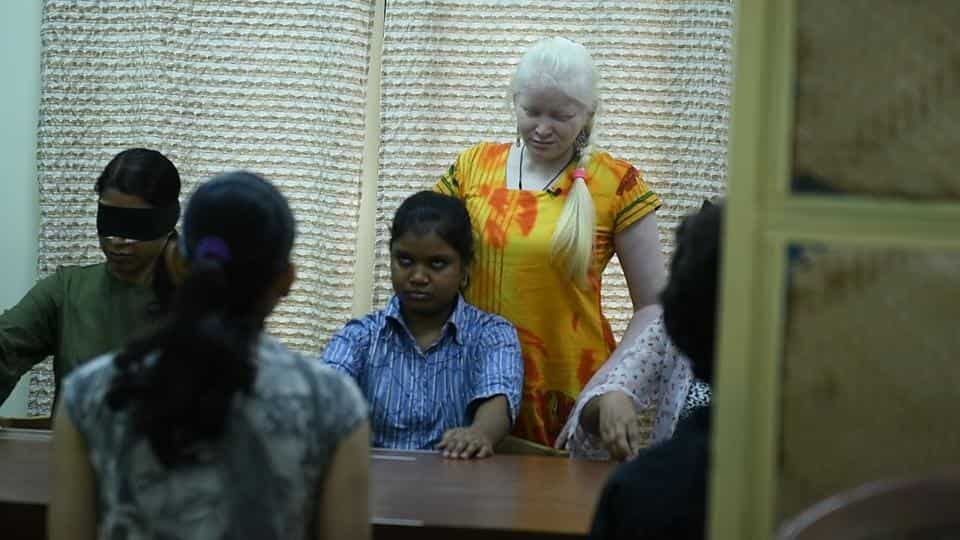 On the occasion of World Sight Day, we tell you how blind women go through a nine month programme where they learn about breast examination, spotting cancers and tumours.
In a unique initiative to battle breast cancer in India, blind women are being trained in Delhi to be able to detect early signs of breast cancer. The National Association for Blind (NAB) Centre for Blind Women and Disability Studies, in collaboration with Discovering Hands, Germany has launched medical tactile examination training in India.
“We were contacted by Discovering Hands Germany in 2015 and they told us about the programme where blind women through a manual check up can detect early signs of breast cancer. Along with Dr. Kanchan Kaur, who is the associate director at the Breast Services in Medanta Medicity, Gurgaon, I went to Germany to thoroughly check this system since we had our doubts about it. However, we realized that the blind women were conducting the examination in the same manner as medical professionals, but with more concentration and focus,” said Shalini Khanna, Director of NAB.
Students at NAB undergoing training. (Athar Rather/HT Photo)
“There is a five day assessment period during we check certain skills that are imperative for them to be chosen for the course, and a lot of them do not succeed during this test. Also, the women have to be over 18, and their age and maturity is an important criterion. After all, they’re looking for a tumour! We coach them so that they’re comfortable about their own bodies and examining others. Breasts are something we don’t really talk about much in India,” explains Khanna.
There is a nine month programme where the women are trained in breast examination, spotting cancers and tumours. But an important question is what the experience was like for the women who take this course and go on to become examiners?
Hasiba Rani, a Medical Tactile Examiner at NAB, shared her experience with us.
“My vision kept diminishing and by the time I finished graduation I was blind. Knowing nothing about blindness and also doing nothing at home I had slipped into depression. Then I found out about NAB and after taking admission started learning various vocations. In 2017 I started learning about the Discovering Hands programme,” said Hasiba.
The initiative to execute this innovative program in hospitals has been taken by Dr Mandeep Singh Malhotra, Head, Surgical Oncology, and his team of doctors at FLT. LT Rajan Dhall Fortis Hospital, Vasant Kunj.
A lot of the women come from backgrounds where being blind meant that their family would ignore them and thought they would amount to no good, which was the case with Shweta Varma, who is also a Medical Tactile Examiner. She gets emotional while talking to us about her journey and starts crying.
“Before I got work here, my family used to think that it’s best to keep me at home because of the way I look and my sight problem. But today I am very happy. Now even my family talks to me and they are proud that I am staying and working in a place like Delhi in a hospital,” said Shweta.
And what would be her message to blind individuals and their parents?
“All I would like to tell the parents of blind people are that do not ignore them and give them support; they will certainly make you proud in the future. And if you are blind and your family does not support you, there are many such centers where you can enrol yourself and learn to support yourself. Do not get disappointed, we aren’t lesser than anyone else and can do a lot,” says Shweta, with confidence.
Hypnosis may be more effective than behavioural therapy to quit smoking: Study
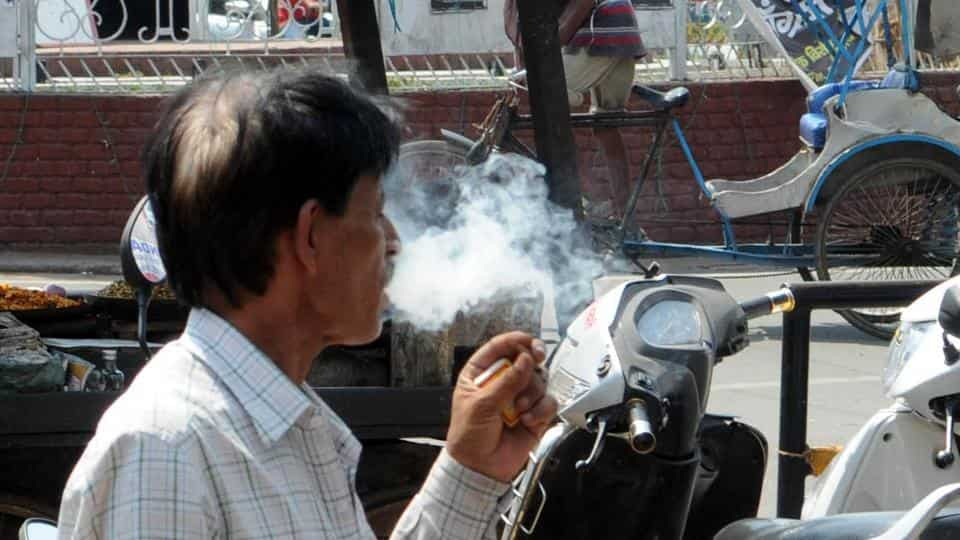 Study shows that after just one session of face-to-face hypnosis, nearly half the people quit smoking. And, 23% remained complete non-smokers, said Dr David Spiegel, Willson Professor and Associate Chair of Psychiatry and Behavioral Sciences.
Hypnosis can be better than behavioural therapies at helping people quit smoking in the long run, according to Stanford doctors, who have now developed an app that can make self-hypnosis accessible to people.
“Our study shows that after just one session of face-to-face hypnosis, nearly half the people stopped smoking. And, 23% remained complete non-smokers, not even a single cigarette for two years,” said Dr David Spiegel.
He is the Willson Professor and Associate Chair of Psychiatry and Behavioral Sciences, and Director of the Center on Stress and Health and the Center for Integrative Medicine at Stanford University School of Medicine.
A preliminary study on the app developed by his team shows the quit rate in people who tried the self-hypnosis using the app was 21% at one month. “We are still awaiting results on how effective the app based approach is in the long run,” he said.
Experts from India say that hypnosis is no longer in use in India as more effective treatments are available now.
“Hypnosis is no longer used in India as a treatment method and is not one of the recommended methods of treating psychiatric disorders, including addictions. This is because there are a lot of variable — the effectiveness of hypnosis depends on the person conducting the session, whether the person is susceptible to hypnosis. Now, there are many drugs and therapies that are very effective,” said Dr Rajesh Sagar, professor of psychiatry at All India Institute of Medical Sciences, Delhi.
Another study published in the Nicotine and Tobacco Research Journal, 29% of the people who underwent hypnosis along with nicotine patch treatment abstained from smoking at the seven-day mark as compared to 23% of the people who underwent behavioural therapy along with nicotine patch. The gap, however, widened at the six month mark, 26% abstained in the hypnosis group as compared to 18% in the behavioural therapy group.
The trend persisted at the one-year mark, with 20% people who underwent hypnosis staying away from cigarettes as compared to 14% in the behavioural therapy group.
In India, tobacco caused 1 in 20 deaths in women and 1 in 5 deaths in men in 2010, found a New England Journal of Medicine study that also put the number of adult tobacco-related deaths at 9,30,000 in one year.
As part of its tobacco cessation programme, the Indian government provides free behavioural counselling over telephone on the national quitline 1800-11-2356.
If proven effective, the app based hypnosis could be beneficial for a resource-poor country like India as it will eliminate the need for a face-to-face or telephonic interaction with a counsellor.
Hypnosis, is very much like mindfulness meditation, but uses a focussed approach to deal with a specific problem.
“Self hypnosis takes a person to a space where there is no critical judgement. Unlike shown in movies, there is in fact an increase in self control in such a state that can be used to alter a person’s thinking or behaviour,” said Dr Spiegel.
Three new genes associated with chronic back pain identified, may help in development of new therapies
 The research team involved 158,000 adults of European ancestry, including over 29,000 individuals with chronic back pain, looking for gene variants that were associated with the presence of back pain.
New York: Researchers, including one of Indian-origin, have identified three novel genetic variants associated with chronic back pain that may help point toward avenues for the eventual development of new therapies.
The study, published in the journal PLOS Genetics, links the risk for back pain with variants in genes controlling skeletal development, among other pathways.
“Chronic back pain is linked to changes in mood, and the role of the central nervous system in the transition from acute to chronic back pain is well-recognised,” said the co-author Pradeep Suri from the University of Washington.
“However, the top two genetic variants we identified suggest causes implicating the peripheral structures, such as the spine,” Suri added.
For the study, the research team involved 158,000 adults of European ancestry, including over 29,000 individuals with chronic back pain, looking for gene variants that were associated with the presence of back pain.
The strongest association was with a variant in the SOX5 gene, which is a transcription factor involved in virtually all phases of embryonic development.
Inactivation of SOX5 has previously been linked to defects in cartilage and skeleton formation in mice, supporting the hypothesis that the variant discovered in this study may contribute to chronic back pain through its influence on some aspect of skeletal development.
The association of the SOX5 variant with chronic back pain was replicated in another group of over 280,000 individuals, including over 50,000 individuals with chronic back pain.
A second gene, previously associated with intervertebral disc herniation, was also linked to back pain, as was a third gene that plays a role in spinal cord development, possibly implicating pain sensation or mood in the risk for back pain.
“The results of our genome-wide association study point to multiple pathways that may influence risk for chronic back pain,” Suri said.
“We expect that further large-scale genetic studies will reveal the importance of both peripheral and central contributors to the complex experience of chronic back pain,” Suri noted.
Kitchen is the best hospital, food the best medicine
 In low and middle-income countries like India, where malnutrition is still not a completely solved problem, there has been a sharp increase in lifestyle disorders.
“Finding a cure is always less lucrative than finding a treatment.” As science and technology grow at an exponential pace, it is pretty obvious that drugs and treatments will remain heavily incentivised.
It is an unfortunate reality that our pharmaceutical companies have been prioritising expensive drugs over cure. At a time when medical expenditure is becoming a major worry and is found to have a significant influence on social security costs, it will be worthwhile to reconsider our approach towards what we “eat”. Instead of paying attention to our diet when we are sick, let`s analyse the power of foods and their impact on our health.
Non-communicable diseases (NCDs) or lifestyle diseases have been rising at an alarming pace across the globe. Cardiovascular diseases like stroke, heart diseases, respiratory disorders and diabetes account for 80 per cent of these NCDs. Till a few years back, these lifestyle disorders more prevalent in the ageing population and affluent societies. However, in low and middle-income countries like India, where malnutrition is still not a completely solved problem, there has been a sharp increase in lifestyle disorders. The increase of these disorders among the younger population adds to the complexity.
An unhealthy diet, physical inactivity and excessive consumption of alcohol and tobacco have been observed to be the major contributing factors for most of these diseases. The good news is that 80 per cent of these NCDs can be prevented with slight modifications in lifestyles. There is evidence that adapting healthy dietary changes, physical activity and abstaining from alcohol and tobacco can help achieve the desired results.
Diet plays a major role in adapting a positive lifestyle. A person who is conscious about what goes in his diet could have a better control on overall quality of life. It is important to understand the value of our everyday diet in order to take the best decisions for our own well-being. You are what you eat.
Thanks to the existing knowledge, we are clear on what we have to eat. The basics of nutrition emphasise eating foods low in saturated fat, trans fat, sodium and sugars.
While what we eat is important, interestingly, how, when and where we eat has an influence on reaping the best of what we eat.
Fancy diet plans and trending super foods might sound exciting. But in order to sustain healthy habits, it is best to consider home as the destination point.
Here are a few points to consider:
Decisions start at shopping: What we eat is not a dietary choice made at home, it is a decision made while shopping at a grocery/vegetable store. Pick the right place to shop, spend quality time on food labels and buy fresh. Healthy and tasty can go together by adding a wide variety of fresh produce to your diet. This can often be consistently followed in our home kitchen.
Discipline of time: Beginning from breakfast, the appropriate timing of each meal is vital for matching the body`s circadian rhythm. A healthy and timely breakfast is a great way to start the day on a positive note. Chrono-nutrition deals with correlating timing of diet with metabolic patterns of diseases. Evidence suggests that irregularity in eating meals is associated with a increased risk for metabolic syndrome — high BMI, blood pressure and increased risk for cardiovascular diseases.
Home remedies: From the common cold to cancer, weight loss to weight gain, there are many home remedies that can help the body perform better. There are plenty of options to serve the needful vitamins, anti-oxidants and essential elements through the right diet. However, it will be good to plan your dietary choices in consultation with your doctor.
Portion size and optimisation: Since there is a personalised approach to cooking, portion size can be optimised with minimal wastage of food.
Economical: When healthy food comes at economical value, sustenance is a great possibility.
Emotional health: Home food can bring the opportunity to enhance emotional wellness. Eating together around a common table is perhaps the best way to strengthen family bonding.
Professional help: Seek a professional support in establishing/supporting healthy dietary patterns at home.
Medical debt is considered the number one reason for personal bankruptcy today. Let us wake up to this reality and instead of falling prey to lifestyle compromises, together raise a toast to good health with a wholesome and hygienic meal made in the home kitchen.
New infections down, but war on AIDS far from won
 Annual infections of HIV have increased in Assam, Mizoram, Meghalaya and Uttarakhand while Bihar, West Bengal, Telangana, Delhi, Jharkhand and Haryana have seen a decline in infection lower than the national average
Has India won the war against HIV? At best, some skirmishes have been won, but the National AIDS Control Programme needs to pull out all the stops to end AIDS as a public health threat by 2030 by reducing new infections by 75% by 2020 against the 2010 baseline.
New infections have gone down, but not enough. Between 2010 and 2017, annual new infections fell from 120,000 to 87,580, AIDS-related deaths from 160,000 to 69,110, and people living with HIV from 2.3 million to 2.14 million despite the average 1.24% annual increase in the country’s population of 1.3 billion.
Annual new infections, which indicate whether an epidemic is growing or ebbing, have fallen by 27% during the period, compared to the global average decline of 16%, but have stubbornly hovered around 80,000 for the past five years.
Annual infections have increased in Assam, Mizoram, Meghalaya and Uttarakhand while Bihar, West Bengal, Telangana, Delhi, Jharkhand and Haryana have seen a decline in infection lower than the national average.
Just eight states accounted for two-thirds of the 87,580 annual new HIV infections in India. Telangana led with 11% of the new infections pan India, Bihar and West Bengal accounted for 10% each, followed by West Bengal (10%), Uttar Pradesh (8%), Andhra Pradesh and Maharashtra (7% each), Karnataka (6%) and Gujarat (5%).
Given the heterogeneity of infection between states, data-driven differential prevention and care services have to be adopted.
For example, among high-risk groups, HIV incidence is the highest among injecting drug users compared to female sex workers and lesbians, gays, bisexuals and transgenders, with the highly populated states of Uttar Pradesh Bihar recording the highest incidence. Apart from testing and treating people living with HIV, outreach programmes must include promoting safe injecting practices and safe sex among the high-risk groups and bridge populations (such as partners, migrants and truckers), who unwittingly spread infection to the general population.
India’s “test and treat” policy provides free anti-retroviral treatment (ART) used to treat HIV and AIDS free to everyone who tests positive. But with the National AIDS and STD Control Programme budget this year increasing fractionally to Rs 2,100 crore from ₹ 2,000 crore in 2017, the majority of funds are used for testing and treatment, with little left for prevention and the promotion of safe practices and behaviours.
The scale-up of the ART programme has led to a 71% decline in AIDS-related deaths in India, compared to 48% worldwide, but the coverage is a low 56% against the global target of putting 82% of people living with HIV on treatment by 2020. AIDS-related deaths are also rising in Bihar, Jharkhand, Haryana, Delhi and Uttrakhand.
ART suppresses HIV viral load to not just lower symptoms and keep people living with HIV disease-free, but also lowers their chances of infecting others. While there is no study for India, using ART to treat HIV can add 10 years to life and gives a 20-year-old who starts treatment a “near normal” life expectancy of 67 years in Europe and north America, found an analysis of 18 studies of over 88,500 people published in The Lancet HIV.
To persuade people to stay on treatment, Mission Sampark (contact) has been started to bring back on ART patients lost to follow-up. Integrating programmes, such testing for HIV and syphilis, HIV and tuberculosis, and HIV and Hepatitis C — will also help take comprehensive services to a wider population.
In India, unprotected sex with an infected person and injecting drug use are the leading causes of new infection.
Ending AIDS as a public health threat by 2030 is only possible only if services are offered to all, including high-risk groups, and everyone who tests positive gets treated. While decriminalising gay sex will help take services to lesbians, gays, bisexuals and transgender people, promotion of safe injection practices still needs a boost to ensure injecting drug users and their partners are protected from infection.
Sitting is being considered the new smoking, your desk job is to blame
 New scientific studies around backaches becoming a lifestyle disorder suggest that sitting could be the new smoking. Your desk job could be your worst enemy if caution isn’t practised in good time.
Your lower back is where the bones, joints, nerves, muscles and ligaments interconnect and work in sync with one another to provide support to your upper body. However, the important role that the lower back plays as the centre of this matrix leaves it more prone to pain and in more extreme cases, injuries.
The rat race of modern life is making bad back a lifestyle disorder, with most people complaining of a catch or a longer period of pain that may keep recurring. Lower back pain can emerge abruptly due to an exercise injury, if you’ve lifted anything heavy or it may just be an age-related disintegration in the body. However, if you have a desk job and spend over 4-5 hours sitting constantly in the incorrect posture, you are prime candidate for recurrent lower backache. Newer scientific studies also point out that sitting is perhaps the new smoking.
Roger Chou, a back pain expert and professor at Oregon Health and Science University, told Vox.com, “Our best understanding of low back pain is that it is a complex, biopsychosocial condition – meaning that biological aspects like structural or anatomical causes play some role but psychological and social factors also play a big role.”
Lower backache treatments generally depend on the intensity of the pain, and by and large involve nursing the pain while working on reducing the chance of its recurrence. Treatments may be active solutions like Yoga, Pilates, Tai chi etc. or passive solutions like a back massage, physiotherapy, acupuncture etc. Simple tweaks in your daily routine starting with consciously having a proper posture while sitting and standing can go a long way. Include stretches (arms, legs, hips, shoulders) every half hour or so.
Most of all, remember to eat right and only keep one day of cheating (if at all you need to) and get enough sleep so you don’t tire yourself out unnecessarily and live a healthier life, which in turn will boost your productivity.
High-fibre diet can reduce brain inflammation caused by ageing
 Fibre that is found in fruits, vegetables, whole grains and legumes can reduce brain inflammation during ageing, says a new study.
Dietary fibre — found mainly in fruits, vegetables, whole grains and legumes — reduces brain inflammation during ageing, finds a study. Dietary fibre promotes the growth of good bacteria in the gut. When these bacteria digest fibre, they produce short-chain-fatty-acids (SCFAs), including butyrate, as by-products.
“Butyrate is of interest because it has been shown to have anti-inflammatory properties on microglia and improve memory in mice when administered pharmacologically,” said Rodney Johnson of University of Illinois.
Although positive outcomes of sodium butyrate — the drug form — were seen in previous studies, the mechanism wasn’t clear. The new study reveals, in old mice, that butyrate inhibits production of damaging chemicals by inflamed microglia. One of those chemicals is interleukin-1ß, which has been associated with Alzheimer’s disease in humans.
Understanding how sodium butyrate works is a step forward, but the researchers were more interested in knowing whether the same effects could be obtained simply by feeding the mice more fibre. “People are not likely to consume sodium butyrate directly, due to its noxious odour,” Johnson said. “A practical way to get elevated butyrate is to consume a diet high in soluble fibre.” The concept takes advantage of the fact that gut bacteria convert fibre into butyrate naturally.
“We know that diet has a major influence on the composition and function of microbes in the gut and that diets high in fibre benefit good microbes, while diets high in fat and protein can have a negative influence on microbial composition and function. Diet, through altering gut microbes, is one way in which it affects disease,” said Jeff Woods, co-author on the study.
Butyrate derived from dietary fibre should have the same benefits in the brain as the drug form, but no one had tested it before. The researchers fed low- and high-fibre diets to groups of young and old mice, then measured the levels of butyrate and other SCFAs in the blood, as well as inflammatory chemicals in the intestine.
“The high-fibre diet elevated butyrate and other SCFAs in the blood both for young and old mice. But only the old mice showed intestinal inflammation on the low-fibre diet,” Johnson said. “It’s interesting that young adults didn’t have that inflammatory response on the same diet. It clearly highlights the vulnerability of being old.”
On the other hand, when old mice consumed the high-fibre diet, their intestinal inflammation was reduced dramatically, showing no difference between the age groups. Johnson concludes, “Dietary fibre can really manipulate the inflammatory environment in the gut.”
The next step was looking at signs of inflammation in the brain. The researchers examined about 50 unique genes in microglia and found the high-fiber diet reduced the inflammatory profile in aged animals.
Although the study was conducted in mice, Johnson is comfortable extending his findings to humans, if only in a general sense. “What you eat matters. We know that older adults consume 40% less dietary fibre than is recommended. Not getting enough fibre could have negative consequences for things you don’t even think about, such as connections to brain health and inflammation in general.” The study appears in the journal Frontiers in Immunology.
Brain cells can help people feel brave, deal with anxiety
 A certain type of cells in the brain’s hippocampus can help you feel brave and take risks while alleviating anxiety.
Ever wondered why some people comfortably walk between skyscrapers on a high-wire while others freeze at the mere thought of climbing off escalators in a shopping mall? It could be the presence of a certain type of cells in the brain’s hippocampus, a study has found.
The findings showed that neurons known as OLM cells in the hippocampus play a significant role in risk taking behaviour and anxiety. The discovery of these neurons and their role in anxiety and risk-taking may open a path for the development of highly efficient anxiolytics and antidepressants without common side-effects, such as apathy, the researchers said.
The OLM cells, when stimulated, produce a brain rhythm that is present when animals feel safe in a threatening environment (for example, when they are hiding from a predator but aware of the predator’s proximity). OLM cells were the “gatekeepers” of memories in the hippocampus and these cells were very sensitive to nicotine. “This finding may explain why people binge-smoke when they are anxious,” said Richardson Leao, from the Brain Institute of the Federal University of Rio Grande do Norte in Brazil.
Manipulation of OLM cells can control anxiety and risk-taking behaviours, the researchers said, in the paper published in the journal Nature Communications. While adaptive (or normal) anxiety is essential for survival because it protects us from harm, but excess levels can be dysfunctional and severely interfere with daily life.
Thus, to act in a single brain region and in a very specific group of cells to control anxiety may be a major breakthrough in treating anxiety and associated disorders like depression, the researchers noted.
If you feel very sleepy during the day, you might be at risk of getting Alzheimer’s
 Researchers at Johns Hopkins University in the US suggest that getting adequate nighttime sleep could be a way to help prevent Alzheimer’s disease
People who feel very sleepy during the day are nearly three times more likely to develop Alzheimer’s disease than those who do not, a long-term study has found.
The study, published in the journal SLEEP, found that adults who reported being very sleepy during the day were thrice more likely to have brain deposits of beta amyloid, a protein that is a hallmark for Alzheimer’s, years later.
Researchers at Johns Hopkins University in the US suggest that getting adequate nighttime sleep could be a way to help prevent Alzheimer’s disease.
“If disturbed sleep contributes to Alzheimer’s disease we may be able to treat patients with sleep issues to avoid these negative outcomes,” said Adam P Spira, an associate professor at the Johns Hopkins Bloomberg School of Public Health.
The study used data from a long-term research started in 1958 that followed the health of thousands of volunteers as they age. As part of the study’s periodic exams, volunteers filled a questionnaire between 1991 and 2000.
Starting in 2005, some of these participants received positron emission tomography (PET) scans using Pittsburgh compound B (PiB), a radioactive compound that can help identify beta-amyloid plaques in neuronal tissue.
The researchers identified 123 volunteers who both answered the earlier questions and had a PET scan with PiB an average of nearly 16 years later. They then analysed this data to see if there was a correlation between participants who reported daytime sleepiness or napping and whether they scored positive for beta-amyloid deposition in their brains.
Their results showed that those who reported daytime sleepiness were about three times more likely to have beta-amyloid deposition than those who did not report daytime fatigue.
After adjusting for demographic factors that could influence daytime sleepiness, such as age, sex, education, and body-mass index, the risk was still 2.75 times higher in those with daytime sleepiness, researchers said.
The unadjusted risk for amyloid-beta deposition was about twice as high in volunteers who reported napping, but this did not reach statistical significance. It is currently unclear why daytime sleepiness would be correlated with the deposition of beta-amyloid protein, Spira said.
One possibility is that daytime sleepiness itself might somehow cause this protein to form in the brain, he said.
This new therapy could boost the immune system’s ability to fight skin cancer
 Experiments in mice with melanoma suggest the therapy could increase chances of recovery in cases where a drug therapy alone is not working.
Scientists say they have identified a molecule that can be added to a cancer vaccine to boost the immune system’s ability to fight skin cancer.
A study, published in the journal PNAS, found that adding the molecule called Diprovocim to an existing vaccine can draw cancer-fighting cells to tumour sites.
Experiments in mice with melanoma suggest the therapy could increase chances of recovery in cases where a drug therapy alone is not working, researchers said.
Melanoma is a form of skin cancer that arises when pigment-producing cells – known as melanocytes – mutate and become cancerous.
“This co-therapy produced a complete response – a curative response – in the treatment of melanoma,” said Dale Boger, a professor at the Scripps Research Institute in the US.
The vaccine also prompts the immune system to fight tumour cells should they ever return, a capability that could prevent cancer recurrence, researchers said.
“Just as a vaccine can train the body to fight off external pathogens, this vaccine trains the immune system to go after the tumour,” Boger said.
Diprovocim works as an “adjuvant,” a molecule added to a vaccine to fire up the body’s immune response. The molecule is easy to synthesise in the lab and easy to modify, which makes it attractive for use in medicine.
The researchers tested the vaccine design on mice with a form of notoriously aggressive melanoma.
All mice in the experiment were given the anti-cancer therapy anti-PD-L1. The mice were then split into three group: eight received the cancer vaccine, eight received the cancer vaccine plus Diprovocim, and eight received the cancer vaccine plus an alternative adjuvant called alum.
The researchers observed a 100% survival rate over 54 days in the mice given the cancer vaccine and Diprovocim. This was in contrast to a zero per cent survival rate in mice given only the cancer vaccine and a 25% survival rate in mice given the cancer vaccine with alum.
“It was exciting to see the vaccine working simultaneously with a cancer immunotherapy like anti-PD-L1,” said Boger.
Further experiments showed that using Diprovocim as an adjuvant boosts the vaccine’s cancer-fighting potential by stimulating the immune system to make cells called tumour-infiltrating leukocytes.