Home / Health (page 36)

Health

Health

Security firm, Health News, ET HealthWorld

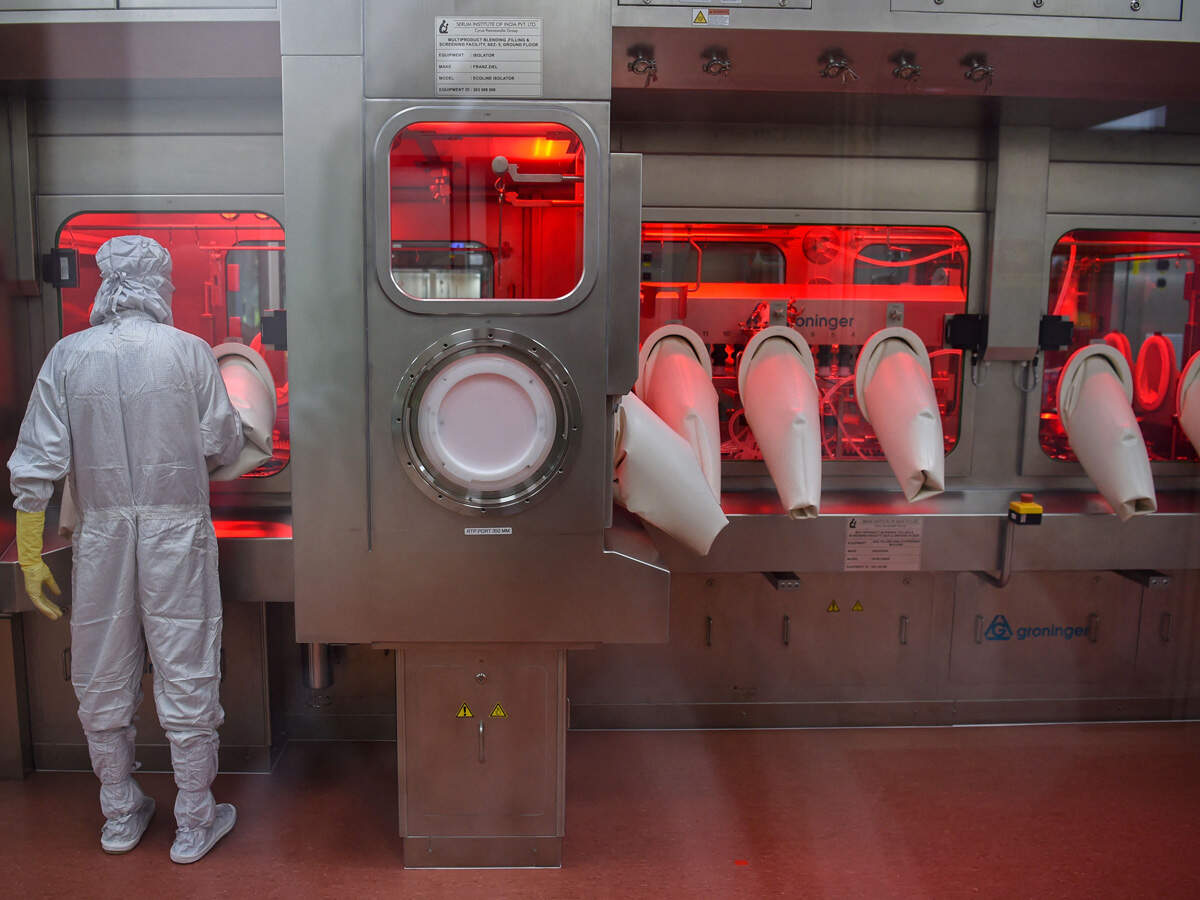
Chinese hackers target Indian vaccine makers Serum Institute, Bharat Biotech: Security firmNEW DELHI: A Chinese state-backed hacking group has in recent weeks targeted the IT systems of two Indian vaccine makers whose coronavirus shots are being used in the country’s immunisation campaign, cyber intelligence firm Cyfirma told Reuters.

Rivals China and India have both sold or gifted Covid-19 shots to many countries. India produces more than 60% of all vaccines sold in the world.

Goldman Sachs-backed Cyfirma, based in Singapore and Tokyo, said Chinese hacking group APT10, also known as Stone Panda, had identified gaps and vulnerabilities in the IT infrastructure and supply chain software of Bharat Biotech and the Serum Institute of India (SII), the world’s largest vaccine maker.

“The real motivation here is actually exfiltrating intellectual property and getting competitive advantage over Indian pharmaceutical companies,” said Cyfirma Chief Executive Kumar Ritesh, formerly a top cyber official with British foreign intelligence agency MI6.

He said APT10 was actively targeting SII, which is making the AstraZeneca vaccine for many countries and will soon start bulk-manufacturing Novavax shots.

“In the case of Serum Institute, they have found a number of their public servers running weak web servers, these are vulnerable web servers,” Ritesh said, referring to the hackers.

“They have spoken about weak web application, they are also talking about weak content-management system. It’s quite alarming.”

China’s foreign ministry did not immediately reply to a request for comment.

SII and Bharat Biotech declined to comment. The government-run Indian Computer Emergency Response Team, with whom Cyfirma said it had shared its findings, had no immediate comment.

The US Department of Justice said in 2018 that APT10 had acted in association with the Chinese Ministry of State Security.

Microsoft said in November that it had detected cyber attacks from Russia and North Korea targeting Covid-19 vaccine companies in India, Canada, France, South Korea and the United States. North Korean hackers also tried to break into the systems of British drugmaker AstraZeneca, Reuters has reported.

Ritesh, whose firm follows the activities of some 750 cyber criminals and monitors nearly 2,000 hacking campaigns using a tool called decipher, said it was not yet clear what vaccine-related information APT10 may have accessed from the Indian companies.

Bharat Biotech’s Covaxin shot, developed with the state-run Indian Council of Medical Research, will be exported to many countries, including Brazil.

US drugmaker Pfizer Inc and its German partner BioNTech SE said in December that documents related to development of their Covid-19 vaccine had been “unlawfully accessed” in a cyberattack on Europe’s medicines regulator.

Relations between nuclear-armed neighbours China and India soured last June when 20 Indian and at least four Chinese soldiers were killed in a Himalayan border fight. Recent talks have eased tension.
News Source link

Private equity fund True North acquires minority stake in Bengaluru-based Anthem Bio

Home grown private equity fund True North has acquired a minority stake in Bengaluru-based Anthem Biosciences – pharmaceutical research, development, and manufacturing company.

True North has agreed to acquire about 8% stake in Anthem Bio for $85 million, said people aware of the development.

Set up by ex-Biocon executive Ajay Bharadwaj, Rs.1200-crore Anthem Biosciences competes with

owned Syngene International and Hyderabad based GVK Bio.

Outbidding global buyout funds, private equity fund True North is all set to acquire a minority stake in Anthem Biosciences, ET reported in January.

Others who were in the race include US funds Warburg Pincus, General Atlantic and Singapore based Temasek Holdings.

Headquartered in Bengaluru, the company offers integrated services across the pharmaceutical sector from discovery to development & manufacturing, to global innovator pharmaceutical and biotechnology companies. The company has over 1,400 employees and It operates two manufacturing facilities near Bengaluru.

“Healthcare and Lifesciences has been a focus sector for True North with investments of $700 mn in the sector till date. We have been closely following the growth story of Anthem Biosciences and are impressed with the progress the team has made in becoming a globally competitive player in the fast-growing CDMO (contract development and manufacturing company) industry,” said

Satish Chander, Partner, True North.

True North had acquired about 10% stake in Syngene in early 2015. Later, True North divested its entire stake through public market sale in 2017 after Synegene got listed in 2016.

Areas in the pharmaceuticals sector like contract research, API/ bulk drug manufacturing in India gained a lot of traction from private equity investors.

India remains the preferred destination in the global pharmaceuticals market, for outsourcing drug research & manufacturing and getting benefit from low cost labour.

Global funds such as General Atlantic and Temasek have invested in contract research space in India with investments such as Rubicon Research and Biocon backed Syngene International, respectively.

A spike in demand for pharma products, induced by the Covid-19 pandemic, and hoarding of supplies by some nations in the wake of production disruptions, have boosted exports, said a recent Crisil report.

Private equity and venture capital investments in health care and life sciences space stood at $2.5 billion, registering a 26.94 percent increase in 2020 compared to a year ago period, according to data compiled by Venture Intelligence, an industry tracker.

News Source link

Legal Action To Be Taken Against Violators Of Covid-19 Norms

Haridwar: Legal action will be taken against attendants of the Kumbh Mela who violate COVID-19 Standard Operating Procedures (SOPs), the Uttarakhand State Disaster Management Department informed on Sunday, adding that SOPs will remain in force throughout the duration of the event.

The Kumbh Mela will take place from April 1 to 30 in Haridwar this year amid the ongoing COVID-19 pandemic.

According to State Chief Secretary Om Prakash, People violating COVID-19 SOPs at 2021 Kumbh Mela Haridwar, will be prosecuted.

ALSO READ | U’khand CM Trivendra Rawat Launches ‘Gharoki Pechan, Chelik Naam’ Initiative To Honour Daughters

All participants will have to register on the Kumbh Mela Administration’s official website and upload documents including a negative COVID-19 RT-PCR report, taken up to 72 hours prior, after which, an e-pass will be generated. “During the mela, pilgrims must maintain a distance of 6 feet and wear masks. Those coming from abroad will have to follow guidelines prescribed by the Union Health Ministry,” a statement quoted the Chief Secretary.

Action will be taken against violators under relevant sections of the Indian Penal Code, it added. Meanwhile, a centralised control room has been set up at Haridwar railway station ahead of Kumbh Mela 2021, the Kumbh Mela Administration said on Saturday.

ALSO READ | CM Trivendra Rawat Meets NITI Aayog Vice-Chairman To Discuss Issues Concerning Uttarakhand

“All the nearby railway stations have been connected through CCTV, with their feed being streamed at this control room. A telephone line has also been set up at the centre,” it said.

The Uttarakhand government has decided to limit the Kumbh this year to 30 days due to pandemic. Kumbh Mela is a religious pilgrimage, one of the largest mass gatherings at one place. It is celebrated four times over a course of 12 years and spans four river-bank pilgrimage sites, namely Prayagraj, Haridwar, Ujjain and Nashik.

News Source link

Report, Health News, ET HealthWorld

65% low, lower-middle income countries slashed education budgets after Covid-19 outbreak: ReportNEW DELHI: Education budgets were cut by 65 per cent of low and lower-middle-income countries after the onset of the Covid-19 pandemic while only 33 per cent of high and upper-middle-income countries did so, according to a report by the World Bank.

The report, compiled in collaboration with UNESCO’s Global Education Monitoring (GEM) Report, said the current levels of government spending in low and lower-middle-income countries fall short of those required to achieve the Sustainable Development Goals (SDGs).

“In order to understand the short-term impact of the Covid-19 pandemic on education budgets, information was collected for a sample of 29 countries across all regions. The sample represents about 54 per cent of the world’s school and university-aged population. The information collected was then verified with World Bank country teams,” the report said.

“Responding to the Covid-19 crisis requires additional spending to adapt schools for compliance with the necessary measures to control contagion and to fund programs to make up for the losses in learning students experienced while schools were closed,” it added.

The sample includes three low-income countries (Afghanistan, Ethiopia, Uganda); 14 lower-middle-income countries (Bangladesh, Egypt, India, Kenya, Kyrgyz Republic, Morocco, Myanmar, Nepal, Nigeria, Pakistan, Philippines, Tanzania, Ukraine, Uzbekistan); 10 upper-middle-income nations (Argentina, Brazil, Colombia, Jordan, Indonesia, Kazakhstan, Mexico, Peru, Russia, Turkey); and two high-income countries (Chile, Panama).

“The following countries have education shares below 10 per cent and therefore are likely to have other main financing sources besides budget assigned by the central government: Argentina, Brazil, Egypt, India, Myanmar, Nigeria, Pakistan, and Russia,” the report stated.

“It is not clear that countries that have seen a decline in their education budget will be able to cover these costs increased during the pandemic alongside the regular increases in funding needed to support growing school-age populations.

“Despite the urgent need for adequate funding to allow school systems to reopen safely, about half of the countries in the sample cut their education budgets. This scarcely bodes well for the future, when macroeconomic conditions are expected to worsen,” it said.

On the other hand, households in low and lower-middle-income countries tend to contribute a greater share of the total education spending than those in upper-middle and high-income countries, the report pointed out.

“While data is limited, household education spending as a share of GDP has increased in low-income countries and households still contribute significantly to the costs of education. The pandemic has resulted in a large and negative income and health shock for many households,” it said.

So far, Covid-19 has infected over 11.43 crore people across the globe and claimed over 25.37 lakh lives.

News Source link

Centre Fixes Price Of Covid-19 Vaccines At Rs 250/Dose In Private Hospitals

Coronavirus vaccination is being done all over India at a rapid pace. According to news agency IANS, the Union government has fixed the price at Rs 250 for a dose of Covid-19 vaccine . This price has been fixed for the vaccine being offered in private hospitals for people over 60 years and those above 45 years of age with serious illnesses.

As per the report, cost break-up of vaccines being provided by private facilities is Rs 150 for a dose plus Rs 100 as a service charge.

ALSO READ | “Abs Of A Boxer” Tweets Vijender Singh With THIS Picture Of Rahul Gandhi; Netizens Now Want Fitness Tips

The government may soon officially announce the price of the vaccine. However, the prices are subjected to change until further notice.

Meanwhile, Gujarat Deputy Chief Minister Nitin Patel on Saturday informed that the price of Covid vaccine will be Rs 250 in private hospitals across the state and people will be vaccinated free in government hospitals.

Covid vaccine will be offered in Government health centers as well as private hospitals from March 1. People will have the option to get vaccinated at the center of their own choice.

The second phase of the vaccination program is starting in the country from March 1. After vaccination of healthcare workers in the first phase, elderly are to be vaccinated.

In addition to the elderly, people between the age of 45-60, suffering from any serious illness, will also be covered in the vaccination drive.

News Source link

What is Voluntary User Verification Mechanism? Here’s all about the govt provision on regulating social media content | Technology News

New Delhi: The Narendra Modi government has notified Information Technology (Intermediary Guidelines and Digital Media Ethics Code) Rules 2021, thereby laying down rules about digital media and OTT. It also focuses more on in house and self-regulation mechanism whereby a robust grievance redressal mechanism has been provided while upholding journalistic and creative freedom.

Among several Guidelines Related to Social Media to Be Administered by Ministry of Electronics and IT, one of the salient features include Voluntary User Verification Mechanism.

What is Voluntary User Verification Mechanism?

Users who wish to verify their accounts voluntarily shall be provided an appropriate mechanism to verify their accounts and provided with demonstrable and visible mark of verification. The Voluntary User Verification Mechanism, for now, looks like just how you do KYC verification for various services. We shall be bringing more updates on it as and when proper guidelines on the same are being made.

How different is Voluntary User Verification Mechanism from the social media blue ticks?

Information Technology (Intermediary Guidelines and Digital Media Ethics Code) Rules 2021 has laid down guidelines for social media intermediaries to enable “voluntary verification” of user accounts. The method for this, as suggested in the guidelines, is that these verified users should be given demonstrable and visible mark of verification which is akin to biometric or physical identification which is publicly visible to all users.

The Information Technology (Intermediary Guidelines and Digital Media Ethics Code) Rules 2021 provision on this verification system should not be confused with the blue ticks that a user gets on social media platforms like Twitter or Facebook or for that matter Instagram. 

This voluntary verification would be different from the existing verified accounts category. The security check user account verification will be developed by the social media company.

News Source link

Happy childhood gives no guarantee for good mental health- The New Indian Express

By ANI

WASHINGTON: While it’s widely known that a difficult childhood could increase the likelihood of mental illness, a new suggested that a happy and secure childhood does not always protect a child from developing a mental illness later in life.

The findings of the study were published in the journal titled ‘Current Psychology’. Conducted in partnership with the University of Canberra, the study examined how early childhood experiences relate to different developmental pathways, and how these might be associated with poor mental health.

Given that both positive and negative childhood experiences were found to manifest as anxiety or other mental health disorders into adulthood, researchers believed that it is our ability to adapt – or rather not adapt – to unexpected scenarios that might be influencing mental health.

In Australia, almost 50 per cent of the population will experience mental illness at some point in their lives, with an estimated 314,000 children aged 4-11 (almost 14 per cent) experiencing a mental disorder.

The national recurrent expenditure on mental health-related services is estimated at USD 9.9 billion or about USD 400 per person.

While the study reaffirmed that people who had adverse and unpredictable early life experiences had elevated symptoms of poor mental health (including depression and paranoia), it also found that children who grew up in stable and supportive environments were also at risk of experiencing symptoms of anxiety in adulthood.

Lead researcher, and PhD candidate, UniSA’s Bianca Kahl, said the study highlighted the indiscriminate nature of mental illness and revealed key insights about potential risk factors for all children.

“As the prevalence of mental health conditions expands, it’s imperative that we also extend our knowledge of this very complex and varied condition,” Kahl said.

Kahl added, “This research shows that mental health conditions are not solely determined by early life events and that a child who is raised in a happy home, could still grow up to have a mental health disorder.”

Kahl noted that there are certainly some missing factors in understanding how our childhood environment and early life experiences might translate into mental health outcomes in adulthood.

Kahl further said, “We suspect that it’s our expectations about our environments and our ability to adapt to scenarios when our expectations are not being met, that may be influencing our experiences of distress.”

“If, as children, we learn how to adapt to change, and we learn how to cope when things do not go our way, we may be in a better position to respond to stress and other risk factors for poor mental health,” Kahl concluded.

News Source link

Positive encouragement may up academic outcomes in school kids | Health News

New York: Offering students more positive encouragement not only reduces disruptive classroom behaviour, but can improve students’ academic and social outcomes, say researchers.

The findings, published in the Journal of Educational Psychology, indicated that a behaviour management intervention helped increase student engagement and boosted the teachers’ confidence in their ability to manage disruptive behaviour.

“As educators, we often focus on communicating what we don’t want our students to be doing in class, but we have found that just doesn’t work,” said researcher Keith Herman from the University of Missouri in the US.

“Instead, we need to be setting clear expectations of what behaviours we do want to be seeing,” Herman added.

For the study, the researchers implemented CHAMPS, a classroom behaviour management training intervention, into a school classroom over the course of five years.

The intervention not only decreased disruptive classroom behaviour and student concentration problems, but also improved both completed class work and standardized test scores, as well as increased the amount of time students remained on task with classroom assignments.

“The intervention is based off principles and practices research has shown to be helpful in creating successful classroom management, such as communicating clear expectations to students, giving more positive encouragement compared to negative reprimands and moving around the classroom to monitor student behaviour,” Herman said.

News Source link

Sodium in Your Diet | FDA

Print & Share (PDF 1.56MB)

Spanish (Español)

Woman looking at Nutrition Facts label and Nutrition Facts label image

You’ve probably heard that most Americans eat too much sodium. Your body needs a small amount of sodium to work properly, but too much sodium can be bad for your health. According to the Dietary Guidelines for Americans, diets higher in sodium are associated with an increased risk of developing high blood pressure, which is a major cause of stroke and heart disease.

Despite what many people think, most dietary sodium (over 70%) comes from eating packaged and prepared foods—not from salt added to food when cooking or eating. The food supply contains too much sodium and Americans who want to consume less sodium can have a difficult time doing so. That is why the U.S. Food and Drug Administration is working with the food industry to make reasonable reductions in sodium across a wide variety of foods. Even though sodium may already be in many packaged foods when you purchase them, you can lower your daily sodium intake by using the Nutrition Facts label.

Look at the Label!

Use the Nutrition Facts label as your tool to make informed decisions!

  • Know the Daily Value. The Daily Values are reference amounts of nutrients to consume or not to exceed each day. The Daily Value for sodium is less than 2,300 milligrams (mg) per day.
  • Use % Daily Value (%DV) as a tool. The %DV is the percentage of the Daily Value for each nutrient in a serving of the food and shows how much of a nutrient contributes to a total daily diet.

    Use %DV to determine if a serving of the food is high or low in sodium and to compare and choose foods to get less than 100% DV of sodium each day.

    As a general guide: 5% DV or less of sodium per serving is considered low, and 20% DV or more of sodium per serving is considered high.

  • Pay attention to servings. The nutrition information listed on the Nutrition Facts label is usually based on one serving of the food. Check the serving size and the number of servings you eat or drink to determine how much sodium you are consuming.

Food Choices Matter!

According to the Centers for Disease Control and Prevention (CDC), about half of the sodium consumed by Americans comes from the following foods:

  • Breads and rolls
  • Pizza
  • Sandwiches (such as hamburgers, hot dogs, and submarine sandwiches)
  • Cold cuts and cured meats (such as deli and packaged ham and turkey)
  • Soups
  • Burritos and tacos
  • Snack foods (such as chips, crackers, microwave popcorn, and pretzels)
  • Chicken (includes processed chicken)
  • Cheese (includes processed cheese)
  • Egg dishes and omelets

But remember, the sodium content can vary significantly between similar types of foods. So, use the Nutrition Facts label to compare products, and don’t forget to check the serving size in order to make an accurate comparison.

Salt and Sodium: Defined

The words “salt” and “sodium” are often used interchangeably, but they do not mean the same thing. Salt (also known by its chemical name, sodium chloride) is a crystal-like compound that is abundant in nature. Sodium is a mineral, and one of the chemical elements found in salt.

Sodium as a Food Ingredient

As a food ingredient, sodium has multiple uses, such as for curing meat, baking, thickening, retaining moisture, enhancing flavor (including the flavor of other ingredients), and as a preservative. Some common food additives—like monosodium glutamate (MSG), sodium bicarbonate (baking soda), sodium nitrite, and sodium benzoate—also contain sodium and contribute (in lesser amounts) to the total amount of “sodium” listed on the Nutrition Facts label.

Surprisingly, some foods that don’t taste salty can still be high in sodium, which is why using taste alone is not an accurate way to judge a food’s sodium content. For example, while some foods that are high in sodium (like pickles and soy sauce) taste salty, there are also many foods (like cereals and pastries) that contain sodium but don’t taste salty. Also, some foods that you may eat several times a day (such as breads) can add up to a lot of sodium over the course of a day, even though an individual serving may not be high in sodium.

Check the Package for Nutrient Claims

You can also check for nutrient claims on food and beverage packages to quickly identify those that may contain less sodium. Here’s a guide to common claims and what they mean:

What It Says

What It Means

Salt/Sodium-Free Less than 5 mg of sodium per serving
Very Low Sodium 35 mg of sodium or less per serving
Low Sodium 140 mg of sodium or less per serving
Reduced Sodium At least 25% less sodium than the regular product
Light in Sodium or Lightly Salted At least 50% less sodium than the regular product
No-Salt-Added or Unsalted No salt is added during processing – but these products may not be salt/sodium-free unless stated

Sodium and Blood Pressure

Sodium attracts water, and a high-sodium diet draws water into the bloodstream, which can increase the volume of blood and subsequently your blood pressure. High blood pressure (also known as hypertension) is a condition in which blood pressure remains elevated over time. Hypertension makes the heart work too hard, and the high force of the blood flow can harm arteries and organs (such as the heart, kidneys, brain, and eyes). Uncontrolled high blood pressure can raise the risk of heart attack, heart failure, stroke, kidney disease, and blindness. In addition, blood pressure generally rises as you get older, so limiting your sodium intake becomes even more important each year.

Know Your Numbers

Sodium is an essential nutrient and is needed by the body in relatively small amounts(provided that substantial sweating does not occur) to maintain a balance of body fluids and keep muscles and nerves running smoothly. However, most Americans eat too much of it—and they may not even know it.

Americans eat on average about 3,400 mg of sodium per day. However, the Dietary Guidelines for Americans recommends limiting sodium intake to less than 2,300 mg per day—that’s equal to about 1 teaspoon of salt!

10 Easy Tips for Reducing Sodium Consumption

Learning about sodium in foods and exploring new ways to prepare foods can help you achieve your sodium goal. And, if you follow these tips to reduce the amount of sodium you consume, your “taste” for sodium will gradually decrease over time—so eventually, you may not even miss it!

  1. Read the Nutrition Facts label
    Compare and choose foods to get less than 100% DV (less than 2,300 mg) of sodium each day.
  2. Prepare your own food when you can
    Limit packaged sauces, mixes, and “instant” products (including flavored rice, instant noodles, and ready-made pasta).
  3. Add flavor without adding sodium
    Limit the amount of salt you add to foods when cooking, baking, or at the table. Try no-salt seasoning blends and herbs and spices instead of salt to add flavor to your food.
  4. Buy fresh
    Choose fresh meat, poultry, and seafood, rather than processed varieties. Also, check the package on fresh meat and poultry to see if salt water or saline has been added.
  5. Watch your veggies
    Buy fresh, frozen (no sauce or seasoning), or low sodium or no-salt-added canned vegetables.
  6. Give sodium the “rinse”
    Rinse sodium-containing canned foods, such as beans, tuna, and vegetables before eating. This removes some of the sodium.
  7. “Unsalt” your snacks
    Choose low sodium or no-salt-added nuts, seeds, and snack products (such as chips and pretzels)—or have carrot or celery sticks instead.
  8. Consider your condiments
    Sodium in condiments can add up. Choose light or reduced sodium condiments, add oil and vinegar to salads rather than bottled dressings, and use only a small amount of seasoning from flavoring packets instead of the entire packet.
  9. Reduce your portion size
    Less food means less sodium. Prepare smaller portions at home and consume less when eating out—choose smaller sizes, split an entrée with a friend, or take home part of your meal.
  10. Make lower-sodium choices at restaurants
    Ask for your meal to be prepared without salt and request that sauces and salad dressings be served “on the side,” then use less of them.  You can also ask if nutrition information is available and then choose options that are lower in sodium

News Source link

Two hospitalised over rare disorder days after taking jab, Health News, ET HealthWorld

Karnataka: Two hospitalised over rare disorder days after taking jabBENGALURU: Two anganwadi workers, who experienced uneasiness after taking the first vaccine dose in January, were recently diagnosed with Guillain-Barre Syndrome (GBS), a rare condition in which a person’s immune system attacks the nerves. They are aged 35 and 45 and currently being treated at a hospital.

The exact cause of the syndrome is not known, but it is often preceded by a bacterial or viral infection. The two women, who were administered Covishield, are among the state’s 20 serious cases of adverse event following immunisation (AEFI).

The 35-year-old woman, from Shivamogga district’s Thirthahalli taluk, fell ill on February 10, almost 15 days after the first vaccine dose, and was admitted to the hospital of Kasturba Medical College (KMC), Manipal, the next day. She had progressive weakness in the hands and legs and also faced breathing difficulty. She was on ventilator support initially, but can breathe on her own now.

“She is currently in the ICU. Her condition was critical on admission, but she has responded to medicines. She is doing well,” said Dr Avinash Shetty, medical superintendent, KMC.

Dr Rajesh Surgihalli, health officer, Shivamogga, said that the woman’s condition was not linked to vaccination. “GBS is a coincidence, it’s not related to the vaccine,” he added.

The 45-year-old woman, from Raichur, complained of pain in the lower limbs and suffered a bout of vomiting on January 27, seven days after the first vaccine dose. She was brought to Nimhans on February 17. According to senior Nimhans doctors who are treating her, instances of GBS as an AEFI were seen in DPT, rabies and influenza vaccines earlier. “It is tough to arrive at conclusive statements like GBS was caused by the Covid-19 vaccine. Earlier, cases were reported after the administration of other vaccines. The condition is marked by an overactive immune system, which doesn’t correctly see the difference between the body’s own cells and vaccine proteins. The hyperactivity causes the neurological disorder,” a doctor explained.

Doctors say it is not possible to predict which person will develop GBS after vaccination. “We will never be able to predict. This is an unfortunate situation, but it should not deter people from taking the Covid-19 vaccine,” another Nimhans doctor told STOI.

The two women didn’t have a prior medical history of neurological issues. “A technical meeting is scheduled for next week to discuss and assess the cause,” said Dr Arundhati Chandrashekar, mission director (Karnataka), National Health Mission. A member of the state Covid-19 task force said that such cases must be studied with utmost care.

News Source link