 Asian Tribune Your Multilingual Newspaper covering World and local news News
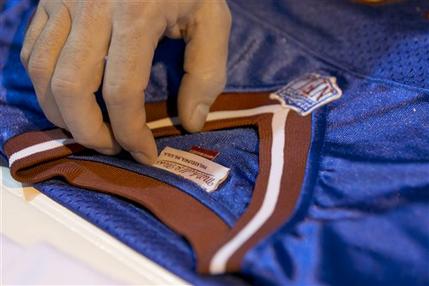 NEW YORK (AP) – The U.S. is not winning the fight against potentially dangerous fakes, as corrupt investigators in China help counterfeiters perfect their art and make it easier for counterfeit goods to enter global supply chains.
Seizures of counterfeits that can be harmful – including auto parts, semiconductors, and personal care items like toothpaste – are on the rise, according to U.S. Customs data. At the same time, the quality of fakes is improving, making them harder than ever to detect, said Stephen Long, deputy chief U.S. Customs and Border Protection officer at the port of New York/Newark.
Long and his colleagues touch about 1 percent of the total container traffic at the port, which handles 3.3 million containers a year. Customs employs a sophisticated screening system to target containers for inspection, part of an effort to ensure that the hunt for fakes does not hinder the flow of legitimate commerce.
Inevitably, things slip through.
One reason Long’s job is getting tougher begins in China. Corrupt investigators can leak proprietary details they learn from brands, which help counterfeiters evade legal responsibility and craft more perfect-looking fakes, said Alex Theil, who runs an anti-counterfeiting company in Shanghai called Harvest Moon. Theil has spent nearly two decades investigating counterfeit auto parts in China.
Fake auto parts are of particular concern to U.S. authorities.
Seizures of such parts in the U.S. surged 83 percent in fiscal year 2014, according to customs data. Among the more than 585,000 parts seized in the last five years were fake brake parts and counterfeit Honda, BMW, and Toyota air bags, made in China. Some of the seized air bags not only failed to deploy but burst into flames and sent shrapnel-like shards toward the driver’s face upon impact.
“Everything within a car can be counterfeited and a profit can be made,” said Bruce Foucart, director of the National Intellectual Property Rights Coordination Center, which is jointly run by U.S. Immigration and Customs Enforcement and Homeland Security Investigations. “We’re seeing counterfeit windshields and tires, safety belts that will open and air bags that will deploy when they shouldn’t or brake pads that don’t work. . . You’re talking about every day getting in the car and putting your life in danger.”
On a recent Wednesday, Long stood in a warehouse with over 10,000 boxes pulled from some 30 suspicious shipping containers towering around him. Dozens of customs officers spend the day at various warehouses sifting through boxes, searching for counterfeits.
On an average day, about 10 percent of the goods at the warehouses are seized as fakes, more than 90 percent of them from China, officials said.
One new counterfeiting strategy is to disguise knock-offs as generics, Long said. Smuggling rings send generic products in one shipment and fake labels in another. The labels are not affixed to the products until after arriving in the United States.
Long pointed to a label that read Tough Crew, an unregistered brand. Customs officers tore it off and uncovered a fake tag for True Religion luxury jeans. Same thing with a pair of boots. Beneath soles marked Megagear inspectors discovered Timberland logos.
At the New York/Newark port alone, the number of counterfeit consumer product safety seizures nearly doubled last fiscal year, to 110 shipments worth of goods, Long said. Among them were counterfeit extension cords, Christmas lights and power strips with faked hologram safety seals.
“They will counterfeit the hologram,” he said, “and it will have substandard wiring that poses a fire risk that could literally burn your house down.”
Check Also

Donald Trump may cause problems for China before he leaves presidency: Experts
WASHINGTON: With US President Donald Trump showing no signs that he will leave office gracefully after …