 Asian Tribune Your Multilingual Newspaper covering World and local news News
 Soon after the incident reached the Railways officials, they called in an ambulance. But sadly, the new-born died shortly after birth.
LUCKNOW: Be it sending an ambulance or attending patients on time, hospitals in the country are on a splurge of denial.
In yet another incident, a pregnant woman in Uttar Pradesh’s Etah was allegedly refused to be admitted in a hospital. Following this, she ended up giving birth to the infant in a toilet at Etah Railway Station.
Soon after the incident reached the Railways officials, they called in an ambulance. But sadly, the new-born died shortly after birth.
“A woman gave birth inside a toilet at railway station, as soon as we got to know, an ambulance was called, but the new-born could not be saved,” a Railways official said.
The reason for denial by the hospital is, however, not known.
This isn’t the first time such a heart-wrenching incident took place. Earlier too, there have been several incidents of refusal to patients by hospital authorities.
Akal Takht forms 21-member censor board to check Sikh-related movies
 Demand for a parallel censor board was raised after the row over controversial movie ‘Nanak Shah Fakir’.
Amritsar : Days after the row over controversial movie “Nanak Shah Fakir”, Akal Takht, the highest temporal seat of the Sikhs, on Tuesday constituted a 21-member “Sikh Censor Board” to look into movies having Sikh-related content.
Demand for a parallel censor board was raised after the row over the movie, portraying Guru Nanak and his family members in human form, was triggered in March this year when producer Harinder Singh Sikka announced its re-release. Amid growing anger, this movie could not be re-released in Punjab and Akal Takht excommunicated Sikka for defying its directions.
“The board has been constituted in view of the controversies over distortion of facts in movies (documentaries, feature and animation) on Sikh gurus, their family members and Sikh personalities in past,” said Akal Takht jathedar Giani Gurbachan Singh.
“After going through the movie scenes related to Sikh history, Sikh heritage and maryada (Sikh code of ethics), the board will submit its report to Akal Takht which will give the final decision,” said Giani Gurbachan Singh.
Simarjit Singh, assistant secretary (dharam parchar), Shiromani Gurdwara Parbandhak Committee, has been appointed coordinator of the board.
The members of the board are Giani Harpreet Singh, jathedar, Takht Damdama Sahib; Giani Maan Singh, granthi, Harmandar Sahib; Bhagwant Singh Sialka, executive member, SGPC; Hardeep Singh Mohali, member, SGPC; Bibi Kiranjot Kaur, member, SGPC; Balwinder Singh Jaurasingha, secretary (dharam parchar), SGPC; Paramjit Singh, chairman (dharam parchar), DSGMC; Giani Parminder Singh, representative, Damdami Taksal; Giani Jasbir Singh Rode, former jathedar, Akal Takht; Giani Resham Singh, representative, Budha Dal (Nihang sect); Baba Nagar Singh Chabewal, representative, Tarna Dal (Nihang sect); Partap Singh, representative, Guru Gobind Singh Study Circle; Pritpal Singh, president, Gurdwara Dukh Niwaran Sahib, Ludhiana; Balkar Singh, Sikh scholar, Patiala; Inderjit Singh Gogoani, GNDU, Amritsar; Prof Amarjit Singh, GNDU, Amritsar; Gurmeet Singh Sidhu, Punjabi University, Patiala; Prof Sarabjit Singh, PAU, Ludhiana; Sarabjinder Singh, Sikh scholar, Ludhiana; Harpal Singh Pannu, Sikh scholar, Patiala and Sukhdev Singh Bhaur, member, SGPC.
Authorities fear Nipah virus may spread to Goa and Mumbai; hospitals on alert
 The Goa health department is constantly in touch with the Kerala government to ascertain the impact and spread of the rare and deadly Nipah virus.
The Goa health department has asked all hospitals to remain alert in the wake of reports of Nipah virus outbreak, which has claimed at least three lives in Kerala. Goa Health Minister Vishwajit Rane said that random checks are also being done on people coming to the state from Kerala. He said that this is being done in accordance with the directives of the central government.
The Goa health department is constantly in touch with the Kerala government to ascertain the impact and spread of the rare and deadly Nipah virus.
Instructions have also been given by the Goa health department to check passengers coming to the coastal state in trains from Kerala. All medical colleges and private hospitals have also been put on alert to tackle any possible case of Nipah virus.
Authorities fear that the deadly virus can spread to Goa and Mumbai in the next few days.
The outbreak of Nipah virus in Kerala has so far claimed three lives, while one person is undergoing treatment and eight are under observation.
Considering the seriousness of the situation, the Centre on Monday rushed a high-level team from the National Centre for Disease Control (NCDC), including its director, Dr Sujeet Kumar Singh and Head of Epidemiology, Dr SK Jain.
According to information available on World Health Organisation (WHO), India has in the past documented human-to-human transmission of the rare Nipah virus. The global health body says that the virus causes severe disease in both humans and animals.
As per a report on WHO website, Nipah is a newly emerging virus, which gets transferred from animals to humans, and it causes severe disease in both animals as well as humans. The natural host of the virus are fruit bats of the “Pteropodidae Family, Pteropus genus”.
The virus first came to light in 1998 when a disease outbreak was reported from Kampung Sungai Nipah in Malaysia. As this suggests, the nomenclature of the disease also comes from the name of the place in Malaysia.
There is no vaccine available for either humans or animals acquiring the rare virus. The primary treatment for human cases is intensive supportive care, says WHO.
Yeddyurappa writes to Election Commission, alleges irregularities in Karnataka Assembly elections
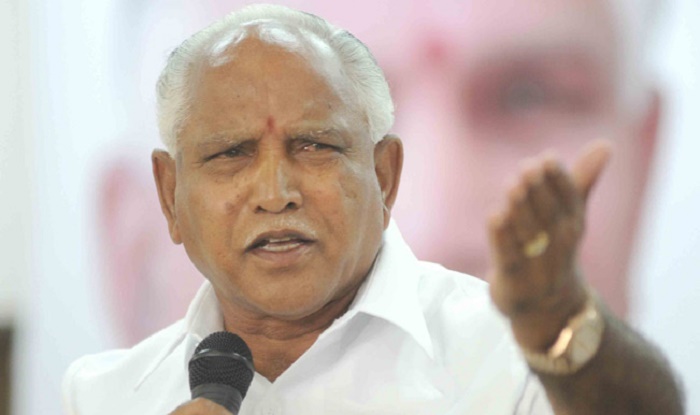 Yeddyurappa said that several irregularities were brought to the notice of officials concerned before the Karnataka Assembly elections, but no cognisance was taken of the same.
Former Karnataka chief minister and Bharatiya Janata Party (BJP) leader BS Yeddyurappa has alleged irregularities in the recently concluded Karnataka Assembly elections. The Lingayat strongman has written a letter to the Central Election Commission in this regard.
The BJP leader, who was sworn in as the Chief Minister of Karnataka on May 17 but resigned just before taking the trust vote, said that several irregularities were brought to the notice of officials concerned before the Karnataka Assembly elections, but no cognisance was taken of the same.
“This is not the first time that irregularities in the conduct of elections were brought to the notice of Election Commission and officials holding elections at ground level. Prior to polling we brought many such irregularities to notice of concerned officials, but in vain,” said Yeddyurappa in the letter.
Claiming that VVPAT machines were found abandoned in a shed near Managuli village in Vijayapur district of Karnataka, the BJP leader said he believed that the Election Commission had taken note of the incident.
“I am of firm belief that Election Commission has taken a serious note of VVPAT machines found abandoned in a shed near Managuli village in Vijayapur district. It indicates grave irregularities in conduct of assembly polls in Karnataka,” he said.
Notably, as many as 9746 voter identity cards were recovered in a flat in Bengaluru just days ahead of May 12 polling in Karnataka Assembly elections. The Election Commission had confirmed that the voter IDs recovered were genuine. An FIR was registered and the polling body had said that it would closely monitor the progress in the case.
Voters in Kerala gave a fractured mandate as the results of the Assembly elections were declared on May 15. Even as the BJP emerged as the single largest party, it fell short of majority. Even before full results came in, the Congress and the JDS announced a post-poll alliance. However, Governor Vajubhai Vala invited the BJP to form the government and Yeddyurappa was even sworn in as the Chief Minister. But in a twist, he resigned just before taking the trust vote in Karnataka Assembly, paving the way for JDS-Congress alliance to form government in the state. JDS leader HD Kumaraswamy is set to take oath as the Chief Minister on Wednesday.
Gujarat cop assaults cricketer Ravindra Jadeja’s wife Riva Solanki, case registered
 The police constable has been identified as Sanjay Ahir. He has been arrested after Riva lodged a complaint against him at a local police station.
AHMEDABAD: Indian cricketer Ravindra Jadeja’s wife Riva Solanki was allegedly thrashed by a policeman on Monday in Gujarat’s Jamnagar. The incident took place in the evening after her car collided with that of the bike of the police personnel.
” A case has been registered. Departmental action will be taken against the cop,” SP Jamnagar Pradip Shejul told news agency ANI.
Jadeja’s mother was inside the car – a BMW – when the policeman got down from his bike following the accident and assaulted Riva.
Although the accident that took place in Jamnagar’s Sharu section area was minor, the policeman reportedly over-reacted and slapped the cricketer’s wife.
The police constable has been identified as Sanjay Ahir. He has been arrested after Riva lodged a complaint against him at a local police station.
Jadeja is currently playing in the Indian Premier League (IPL) for the Chennai team. The 29-year-old Indian spinner tied the knot with Riva on April 17, 2016.
PM Modi, Vladimir Putin hold ‘extremely productive’ talks on bilateral, global issues
 PM Modi on Monday said friendship between India and Russia had stood the test of time and their ties will continue to scale newer heights in the coming years.
Sochi: Prime Minister Narendra Modi on Monday said he had “extremely productive” discussions with Russian President Vladimir Putin and they reviewed the complete range of India-Russia relations as well as global issues and underlined the need for a multi-polar world during their first ever informal summit in this Black Sea coastal city.
Modi said friendship between India and Russia has stood the test of time and their ties will continue to scale newer heights in the coming years.
He said the seeds of the ‘strategic partnership’ sown by former prime minister Atal Bihari Vajpayee and President Putin have now grown into a “special privileged strategic partnership” which is a “very big achievement” in itself.
“I am grateful to President Putin who invited me for an informal meeting and hence, in the long friendship of ours, this is a new aspect that has been attached to our relationship,” Modi said.
“You have added a new aspect of an informal summit in the bilateral relationship which I think is a great occasion and creates trust,” he said.
A statement issued by the Ministry of External Affairs said the two leaders agreed that the Special and Privileged Strategic Partnership between India and Russia is an important factor for global peace and stability.
“They shared the view that India and Russia have an important role to play in contributing to an open and equitable world order. They recognised each other’s respective roles as major powers with common responsibilities for maintaining global peace and stability,” the statement said.
The two leaders held in-depth discussions on major international issues and agreed on the importance of building a multi-polar world order, it said.
They decided to intensify consultation and coordination with each other, including on the Indo-Pacific Region.
“Both leaders expressed their concern over terrorism and radicalisation, and their determination to combat terrorism in all its forms and manifestations. In this context, they endorsed the importance of restoring peace and stability in Afghanistan in an atmosphere free from the threat of terrorism, and agreed to work together towards achieving this objective,” the statement said.
Modi and Putin held a detailed exchange of views on the national development plans and priorities.
The two leaders directed their officials to prepare concrete outcomes for the forthcoming Summit in India later this year, the statement said.
They agreed to institute a Strategic Economic Dialogue between NITI Aayog and the Ministry of Economic Development of Russia, to identify greater synergy in trade and investment. They noted with satisfaction the expanding cooperation in the energy sector and welcomed the arrival of the first consignment of LNG under a long-term agreement between Gazprom and GAIL, next month.
The two leaders also reiterated the significance of longstanding partnership in the military, security and nuclear energy fields and welcomed the ongoing cooperation in these areas.
Modi also thanked Russia for playing a major role in helping India get a permanent membership in the Shanghai Cooperation Organisation (SCO). India and Pakistan were admitted last year into the organisation.
“We are working together on International North-South Transport Corridor (INSTC) and BRICS,” Modi said.
He also congratulated Putin for becoming the President for the fourth time with an overwhelming majority.
Welcoming Prime Minister Modi to Sochi, Putin said his visit would give a fresh impetus to bilateral ties.
“We are delighted to see you, Mr Prime Minister, and consider you personally as a big friend of our country. We are very glad to be able to have this meeting,” Putin told Modi.
He said Russia and India maintain a high strategic level of partnership, with close cooperation between the two countries’ defence ministries.
“Our defence ministries maintain very close contacts and cooperation. It speaks about a very high strategic level of our partnership,” Putin said.
He also hailed joint activities of the two countries in the area of foreign politics, in particular within the United Nations, BRICS and the SCO.
“There is no need to explain Russian-Indian relations since we all know that they have deep roots. However, we have been able to create additional momentum recently. Last year, our trade saw a significant increase, adding another 17 percent since the beginning of this year,” he said.
Russia’s official Tass news agency quoted Foreign Minister Sergei Lavrov as saying that the talks were “very intense.”
“I am confident that the ongoing informal contacts between the leaders of Russia and India will be useful and will help define the further guidelines for our development and strategic partnership,” Lavrov said.
“We discussed the whole spectrum of our particularly privileged strategic partnership,” the minister said.
The summit took place amidst the possible impact of the US sanctions against Russia under the Countering America’s Adversaries Through Sanctions Act (CAATSA) on Indo-Russia defence cooperation.
The CAATSA is a United States federal law that imposed sanctions on Iran, North Korea, and Russia. It includes sanctions against countries that engage in significant transactions with Russia’s defence and intelligence sectors.
India could face US sanctions for purchasing high-value military defence items, in particular, state-of-the-art S-400 Triumf missile defence system, from Russia under the act.
Karnataka Congress MLA Shivaram Hebbar claims bribe audio tape against BJP fake
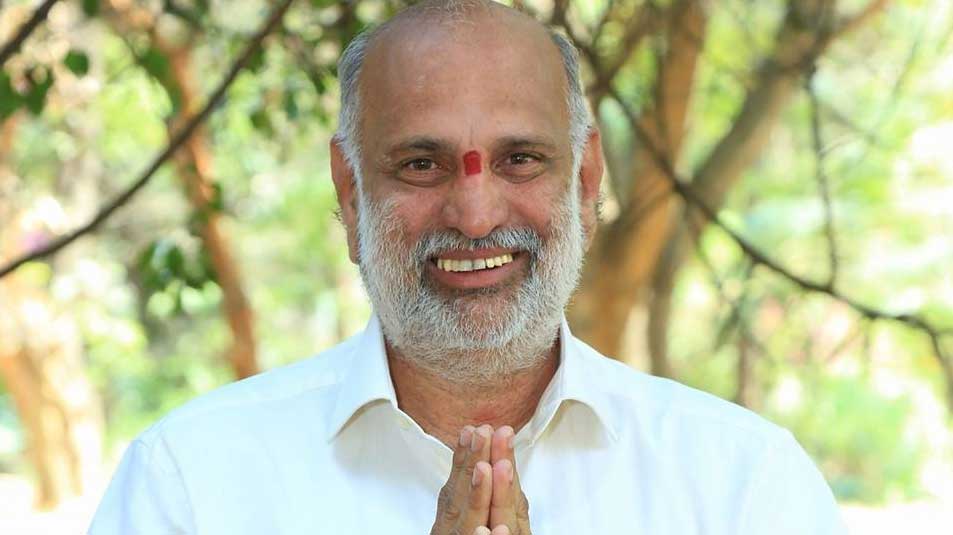 In a strongly-worded Facebook post, Shivaram Hebbar, Congress MLA from Yellapur, said that the voice of the woman heard in the audio tape is not of his wife. His wife had received no calls, he further added.
BENGALURU: Even after the high-pitched political drama concluded in Karnataka after nearly a week, the mudslinging among the party leaders seems to have no end. In an embarrassment for the Congress, who is all set to form the government in the state in alliance with JDS, a lawmaker of the grand old party alleged that the video clip which his party had released accusing the BJP trying to lure their MLAs, is fake.
In a strongly-worded Facebook post, Shivaram Hebbar, Congress MLA from Yellapur, said that the voice of the woman heard in the audio tape is not of his wife. Condemning the incident, the Congress lawmaker said that his wife had never received any such call.
While the crucial power struggle was going on in Karnataka, the Congress had on Saturday released an audio clip claiming that the tape was of a recorded call by BJP leaders who tried to offer Rs 15 crore bribe to Hebbar’s wife for the lawmaker’s support. The MLA, however, has dismissed the claim terming the tape as fake and fabricated.
The post has come as a relief to the BJP following allegations made by the Congress of trying to buy lawmakers of the grand old party.
The Congress party had released a few more audio clips which purportedly revealed how the BJP attempted to lure Congress leaders to break ranks with the grand old party. The Congress had alleged that the BJP was repeatedly offering money to its MLAs in Karnataka in order for it to make up its deficit – a charge the saffron party has vehemently denied.
Following the development, the saffron party demanded an apology from the Congress for circulating fake audio tapes ahead of the crucial trial of strength in Karnataka.
Pro-Khalistani groups planning to target Punjab police officers with ISI’s support: Intelligence report
 The ISI is trying to radicalise the youth of Punjab, as per an intelligence report.
New Delhi: Pro-Khalistani groups are compiling a list of police officers who have been involved in the interrogation of arrested terrorists in Punjab, as per an intelligence report. These groups are also trying to collect details about members of the families of police officers living or studying outside India, particularly in Canada, US, UK and Europe.
Details of the report submitted to Ministry of Home Affairs, accessed by Zee Media, reveals that Pakistan’s ISI, with the support of pro-Khalistani groups, is trying to radicalise the youth of Punjab. ISI is also conspiring to target few religious leaders in Punjab to destabilise the state, the report says. Evidence gathered by intelligence agencies points towards the ISI as the key preceptor of extremism in Punjab.
Zee Media had earlier reported that pro-Khalistani groups with the support from ISI were trying to hire criminals and gangsters in Punjab to create unrest in the state. Intelligence inputs say that that pro-Khalsa group of the United Kingdom has started a campaign on the social media to appeal to the people of Punjab to join the ‘struggle for Khalistan’.
According to a Ministry of Home Affairs report, these groups living in New York had organised a conference in April 2018, in which various pro-Khalistani elements from India, Germany, UK and USA had participated in the conference.
Ludhiana: Enraged over domestic abuse, woman kills husband; attempts suicide
 According to police, she first strangulated her husband and later thrashed him with a rod to ensure that he had died. Such was the severity of the thrashing that his eyeballs had come out of the socket.
Ludhiana : Fed up with her husband’s drinking and domestic violence, a 30-year-old woman bludgeoned him to death with an iron rod on the intervening night of Sunday and Monday at Lal Bagh colony in Sarabha Nagar of Ludhiana.
According to police, Nanki of Lal Bagh Colony first strangulated her husband Surinder Kumar (35) and later thrashed him with a rod to ensure that he had died. Such was the severity of the thrashing that Surinder’s eyeballs had come out of the socket, police added. Other members of the family were sleeping in a verandah at that time.
Police said the accused confessed to her crime in front of her family after she was saved by a railway employee when she was going to the railway crossing with an intention to jump before a running train.
She was later handed over to police and charged for murder.
Inspector Brij Mohan, SHO at police station Sarabha Nagar, said Surinder Kumar was a habitual drinker. “Relation between husband and wife deteriorated as Surinder used to thrash her in an inebriated condition,” he said.
The woman told police that on Sunday, her husband thrashed her again and in a fit of rage, she strangulated him in his sleep. “To confirm his death, she took an iron rod kept in the room and hit him. Her in-laws and children were sleeping outside the room. After murdering her husband, she rushed to the railway crossing to end her life, but a railway employee stopped her and took her home,” the SHO said.
A case was registered following the statement of Shiv Lal, father of the deceased. In his complaint, Shiv Lal said at 2am, a railway employee got Nanki home and stated that she had attempted suicide. He said he did not hear anything as he, his wife and grand children were sleeping outside. “I thought that she had left the house following an argument with Surinder, but she suddenly started crying and apologised. She then told us that she killed Surinder,” said Shiv Lal.
He added, “I rushed to the room and was shocked to see my son’s body lying in pool of blood with his eyeballs out of the sockets. I immediately informed police.”
Inspector Mohan said the woman confessed to her crime and police recovered the iron rod used in the crime from the room. Both husband and wife worked as labourer at a construction site.
China launches relay satellite to explore Moon’s far side
 Named Queqiao (Magpie Bridge), the 400-kg satellite has a designed life of three years.
Beijing: China successfully launched a relay satellite early today to set up a communication link between the Earth and a planned Chinese lunar exploration mission to explore the Moon’s mysterious far side.
Named Queqiao (Magpie Bridge), the 400-kg satellite has a designed life of three years.
It was carried by a Long March-4C rocket that blasted off at 5:28 AM (local time) from southwest China’s Xichang Satellite Launch Center, the China National Space Administration (CNSA) said.
“The launch is a key step for China to realise its goal of being the first country to send a probe to soft-land on and rove the far side of the Moon,” said Zhang Lihua, manager of the relay satellite project.
About 25 minutes after lift-off, the satellite separated from the rocket and entered an Earth-Moon transfer orbit with the perigee at 200 kms and the apogee at about 400,000 kms. The solar panels and the communication antennas were unfolded.
Queqiao is expected to enter a halo orbit around the second Lagrangian (L2) point of the Earth-Moon system, about 455,000 kms from the Earth.
It will be the world’s first communication satellite operating in that orbit, state-run Xinhua news agency reported.
The satellite carries several antennas. One, shaped like an umbrella with a diameter of five metre, is the largest communication antenna ever used in deep space exploration, said Chen Lan, deputy chief engineer of the Xi’an Branch of the China Academy of Space Technology (CAST).
The satellite could stay in the halo orbit around the L2 point of the Earth-Moon system for a long time by using relatively little fuel, thanks to the gravitational equilibrium at that point.
But the mission must overcome many challenges, including multiple adjustments to its orbit and braking near the Moon and taking advantage of the lunar gravity, Zhang said.
In a Chinese folktale, magpies form a bridge on the seventh night of the seventh month of the lunar calendar to enable Zhi Nyu, a weaver girl who is the seventh daughter of the Goddess of Heaven, to meet her beloved husband, cowherd Niu Lang. The couple were separated by the Milky Way.
Chinese scientists and engineers hope the Queqiao satellite will form a communication bridge between controllers on the Earth and the far side of the Moon where the Chang’e-4 lunar probe is expected to touch down later this year.
Today’s launch was the 275th mission of the Long March rocket series.
Tidal forces of the Earth have slowed the Moon’s rotation to the point where the same side always faces the Earth, a phenomenon called tidal locking.
The other face, most of which is never visible from the Earth, is the far side or dark side of the Moon, not because it’s dark, but because most of it remains unknown.
With its special environment and complex geological history, the far side is a hot spot for scientific and space exploration.
The Aitken Basin of the lunar south pole region on the far side has been chosen as the landing site for Chang’e-4. The region is believed to have great research potential.
However, landing and roving require a relay satellite to transmit signals.
The Chang’e-4 mission will be more complicated than Chang’e-3, China’s first soft landing on the Moon in 2013.
“We designed an orbit around the Earth-Moon L2 point where the relay satellite will be able to ‘see’ both the Earth and the far side of the Moon,” Bao Weimin, director of the Science and Technology Commission of the China Aerospace Science and Technology Corporation said.
Establishing a communication link is essential for the success of the Chang’e-4 mission, Bao was quoted by Xinhua.